
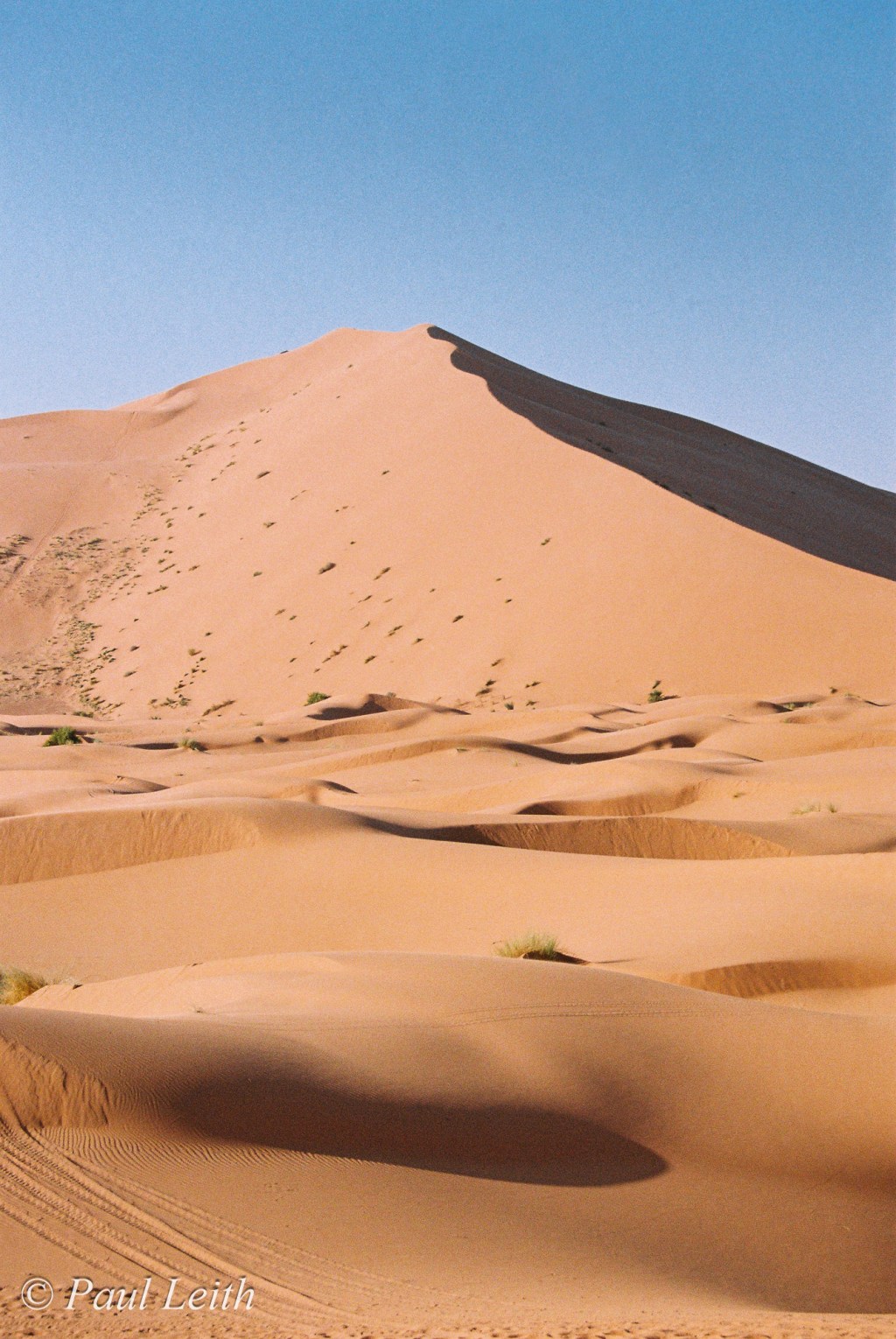
It’s always been a wish of mine to visit Morocco and in particular the Sahara Desert, I think it’s years of childhood movies and books have created this spell of intrigue about the country of many facets: frantic & bustling market places, snow capped mountains, barren desert scrubland, and iconic allure of camels trudging across the hot desert dunes in the searing heat.
So 2026 was the year I would finally make my way from lush green Ireland to ruddy red Morocco with a couple of cameras and some rolls of trusty FujiColor C200 film.
First though, a big shout out to Rodney O’Callaghan Photography tours who prepared the itinerary, accommodation and transportation. Without his expertise, guidance & insights I wouldn’t have been able to see & experience half of what this wonderful country had to offer. I encourage you to please visit his website if you’re interested in taking your camera to new & interesting locations, highly recommended !
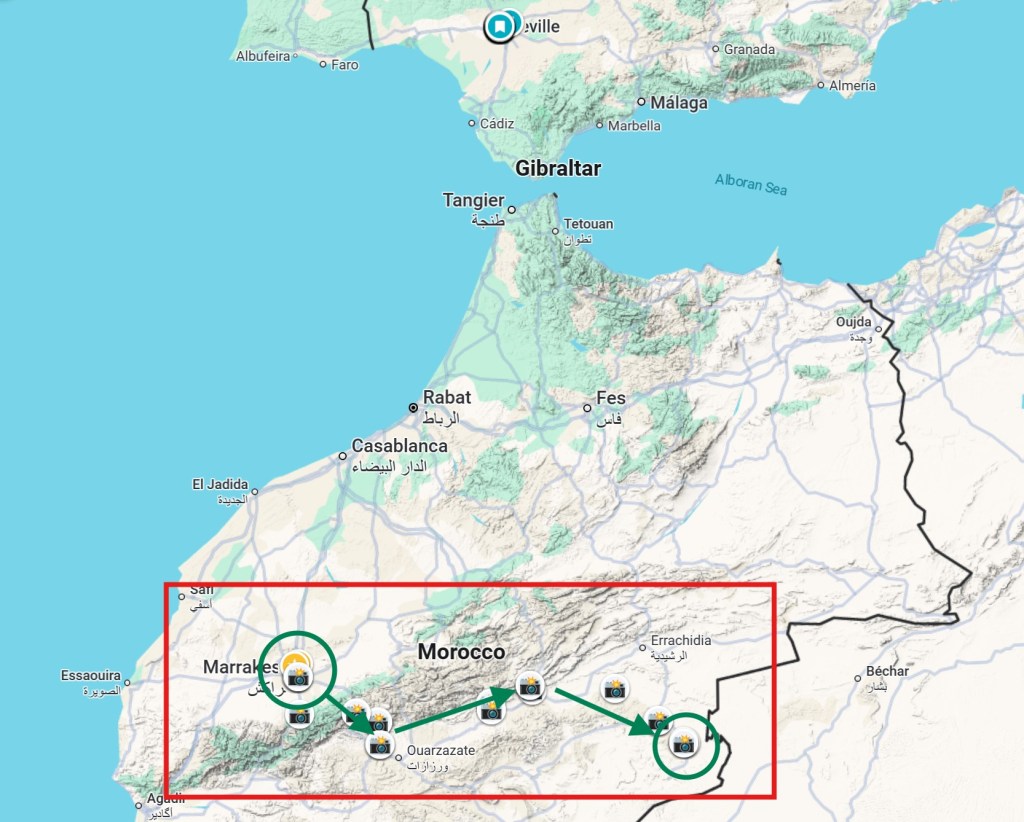
As you can see from the map above, the capital city Marrakesh, is in the heart of Morocco at the foothills of the Atlas mountains, which makes for a wild mercurial shift in the landscape – lush green valleys on one side, and searing barren, desert heat on the other.
What did I bring?
Going on a trip like this had me fraught with choices, in terms of clothing and equipment. Luckily Rodney was able to help me with advice on everything from lens choices specific to Morocco, clothing, food and even cultural awareness.
Let’s a a quick look in my camera bag:
- Camera: Nikon F75 / N75 (my blitz review here) – super light weight & highly functional.
- Lenses: Nikon 28-80mm (my review here) and my Nikon 70-30mm (review here). In retrospect, for mountains and desert, a long telephoto is absolutely critical, the longer the better.
- Film: 3 x FujiColor C200 because I know exactly how the film renders and the details I’ll get from it, plus I had a few rolls spare 🙂
- Tripod: errr … I wish I had of brought one ! I foolishly thought a small stowaway monopod would suffice, but I was wrong. I found myself having to frequently wedge the monopod against my upper body in order to hold my camera & telephoto lens steady at very low shutter speeds = very impractical 😕
Meanwhile, in terms of everything else, a few interesting yet notable items:
- Clothing: a fleece and pack-away padded jacket are super important, especially for the cold mornings & evenings in the desert and mountains of Morocco
- Mobile Roaming: unless you want to pay a fortune for data & phone calls, an eSIM or roaming package are crucial for keeping contact with home
- Extension Lead: yep, staying in guest houses or local hotels means that where you’re going to charge your electronic devices may not necessarily be at arms length! Don’t forget the two-pronged Euro adapter too.
Intense Marrakesh
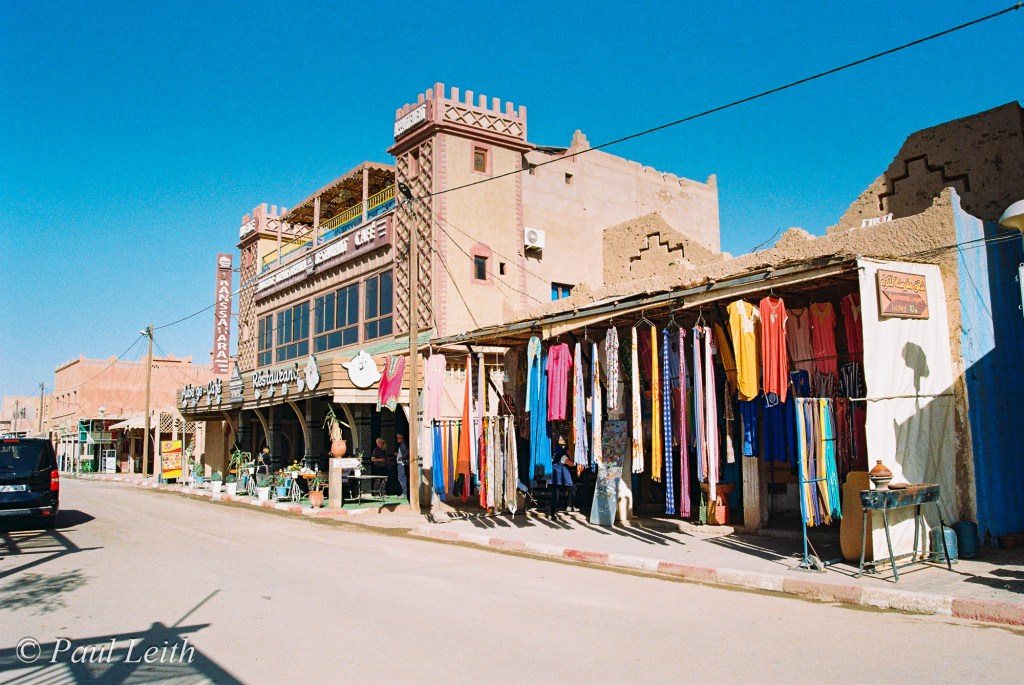
I was warned that the souks (covered market places) in Marrakesh would be nothing short of a sensory overload, and yes, I can verify that this is 100% accurate 😄 Wow, there is so much to see, hear, smell and touch … it’s quite an experience!
From a photography perspective, the immediate obstacle is that you can’t really take ‘serious’ photographs of people and activities without finding yourself in a scenario whereby you’re getting confronted and asked to a) pay money for taking the person’s photo, b) delete the photos, or c) buy something in exchange for taking photos. To be fair, this is understandable, as the locals are just trying to get on with their daily trade without being photographed like exhibits, which is then exacerbated by many photo-snappers profiting from the images without even supporting the locals by buying something in return.
To that end, both out of respect for the locals and to properly enjoy ‘being in the moment’ at the souks, I only took these photos on film, and I saved my rolls for stunning locations to follow in the days ahead.
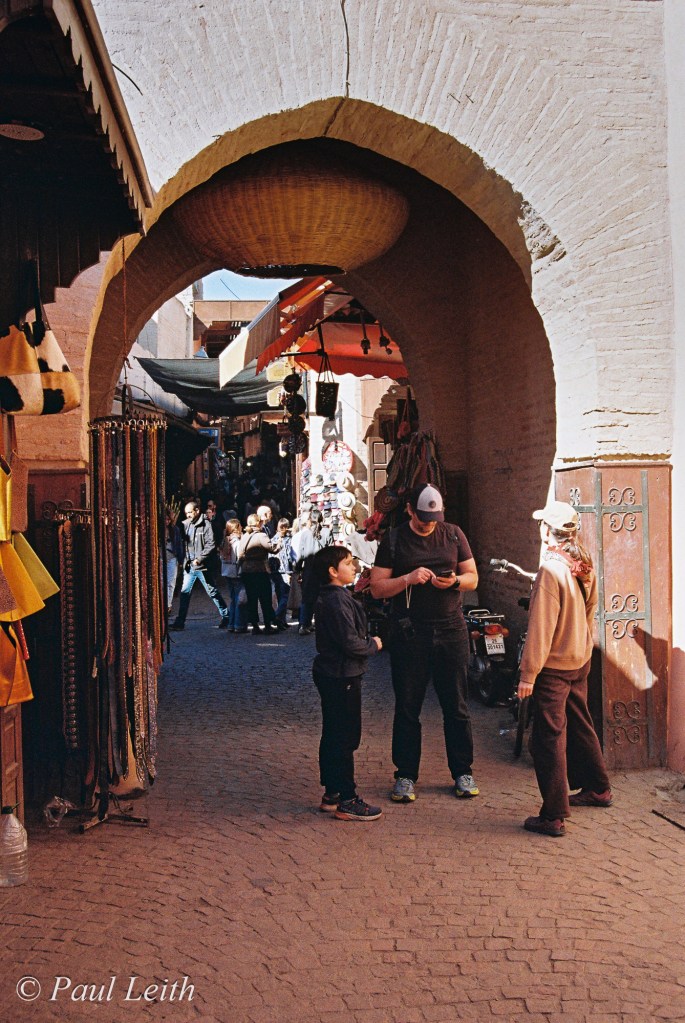
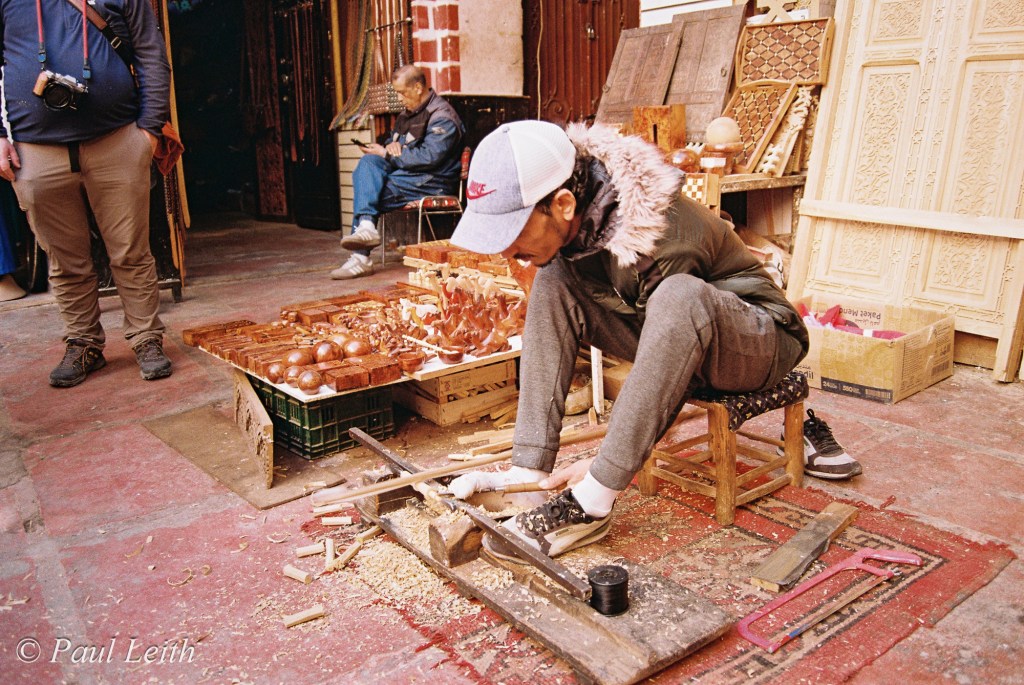
By the way, if you look closely at the second image above, you’ll see that the artisan is carving something from wood, on a simple hand-spun lathe, using both his hands and feet … it was fascinating to witness, such mastery, that produced a beautiful chess piece, which I purchased.
Let me add, that the local food in Marrakesh was amazing! It didn’t matter whether you ate on the corner of the street or in an up-market alcove cafe, the flavour, freshness and presentation of the cuisine was fantastic.
Into the mountains
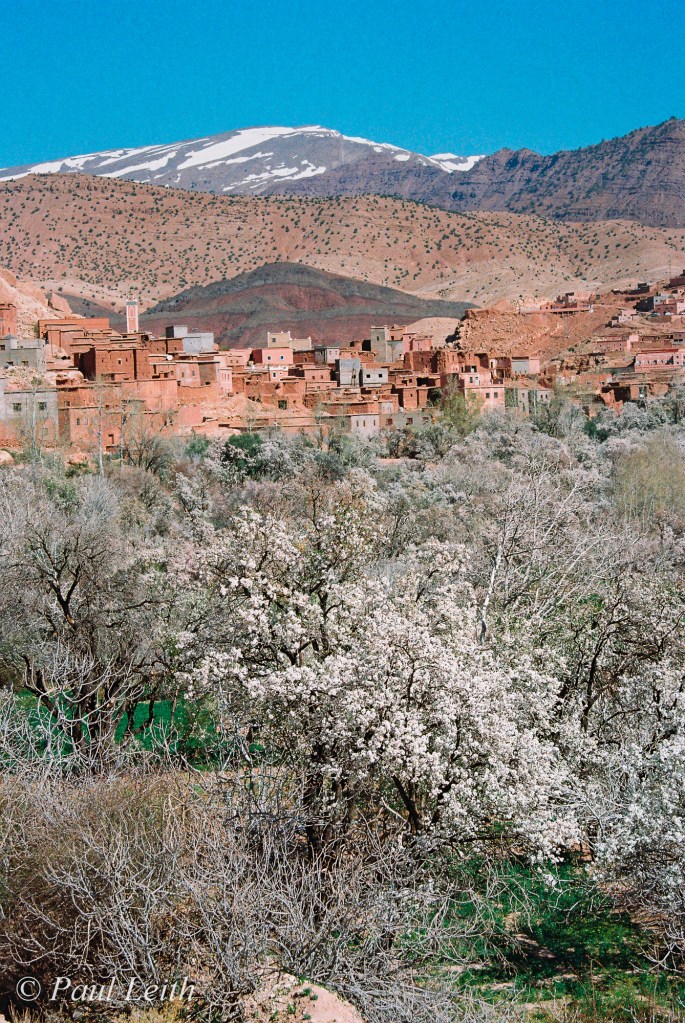
The frenetic pace of Marrakesh city quickly ebbed away as we drove along the N9 road up into the beautiful Atlas Mountains and across the Tizi Tichka Pass at 2,260m high (7,257 ft) . It’s quite the spectacle seeing snow-covered peaks when you know there’s going to be barren desert scrub for miles on the other side.
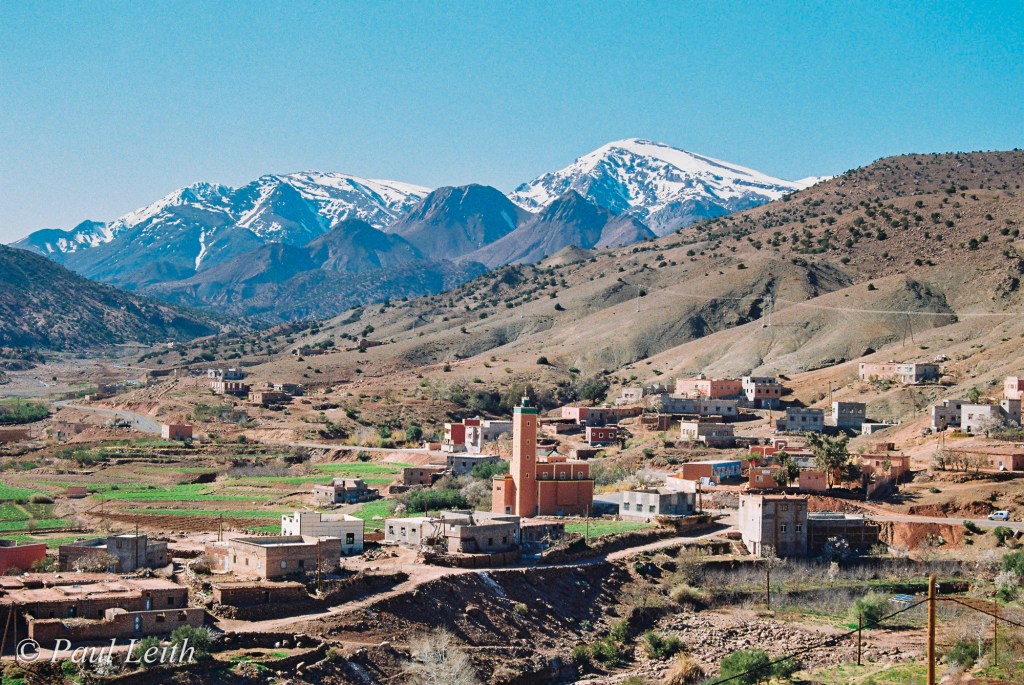
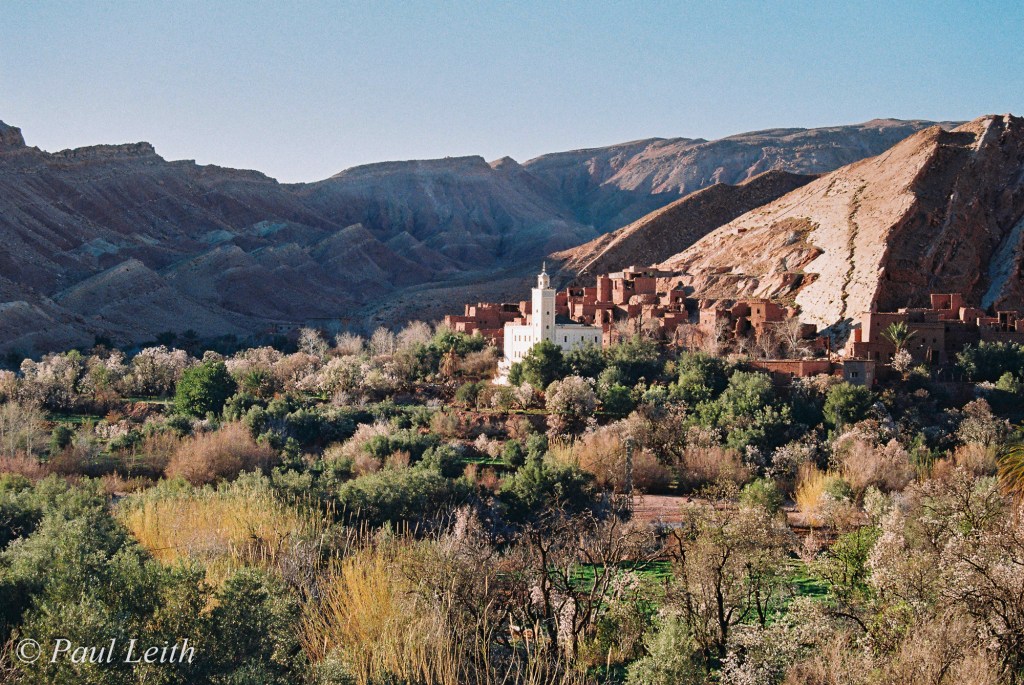
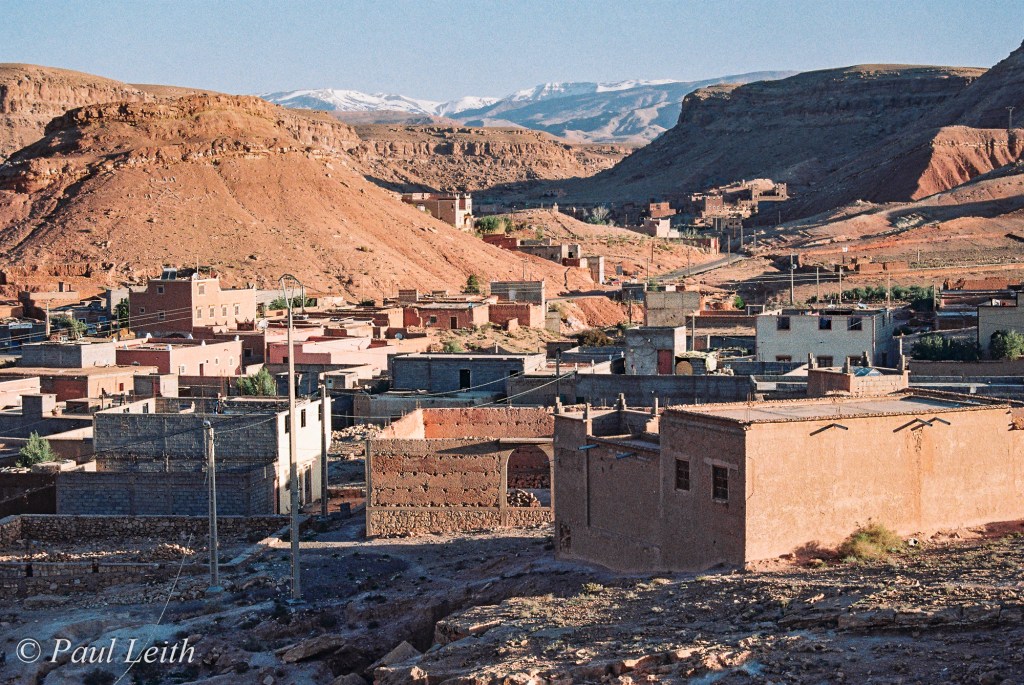
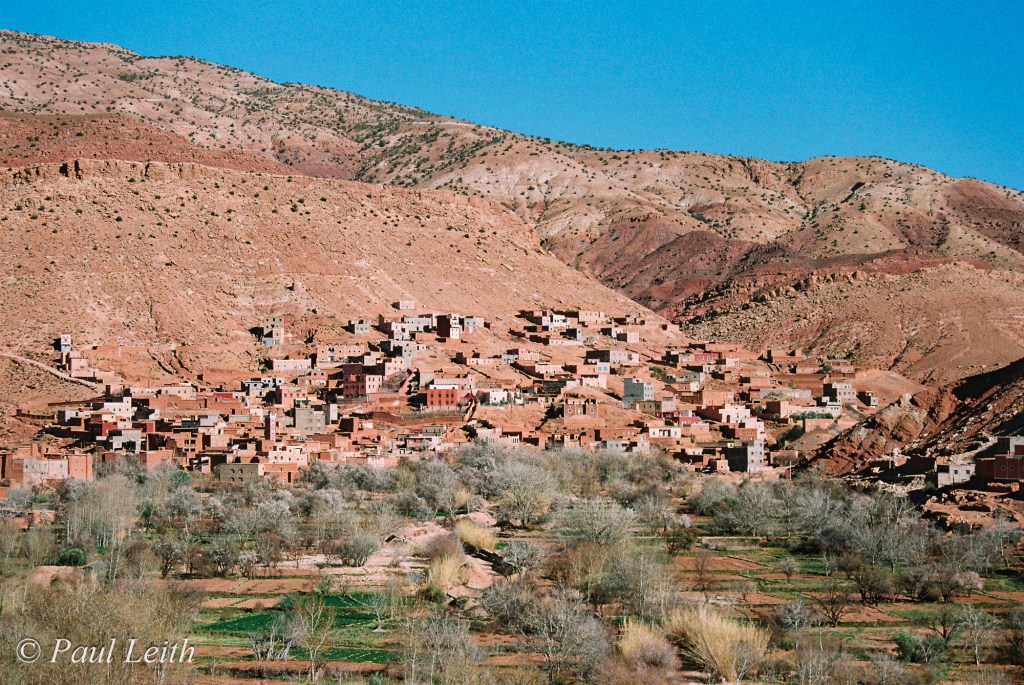
Something I wasn’t prepared for were the picturesque villages nestled among the steep valleys, which featured clusters of ruddy-red, flat-topped, geometrical mud wall houses and towers. It’s quite a sight and so utterly different from what I’m used to seeing in Ireland and mainland Europe.
The mosque minarets in particular were extremely eye-catching as you scanned the rugged landscape, and on occasion you’d see a local villager bringing their donkey along the tracks loaded up with straw or local produce, an unforgettable sight.
From scrubland to dunes
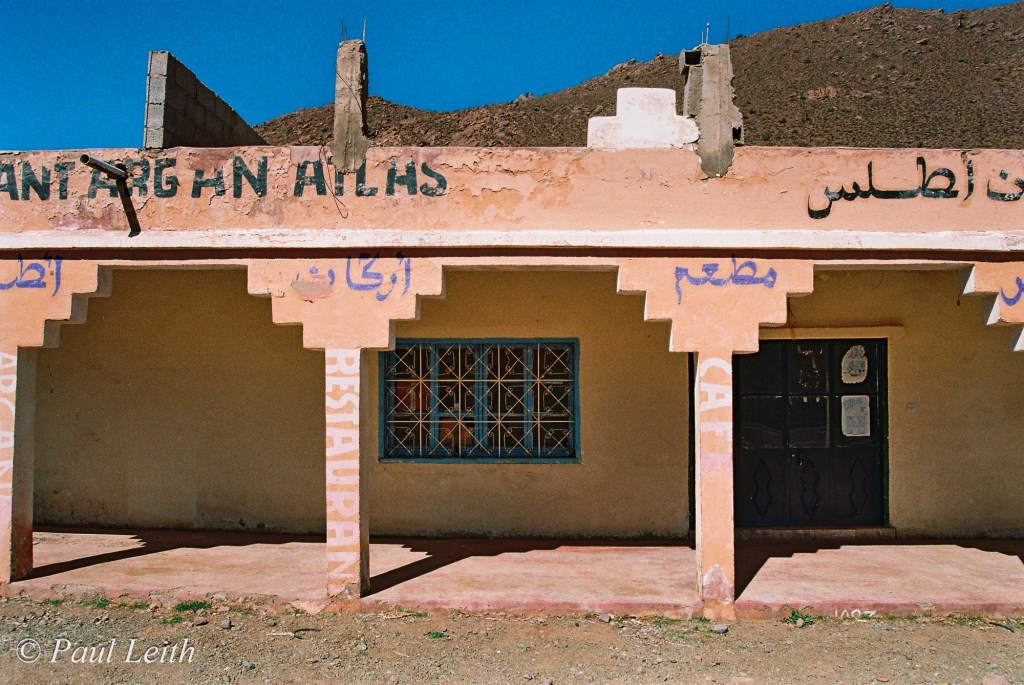
It’s a lengthy drive across the scrubland to Tinghir and to the final destination that was Merzouga. At times, there was quite literally nothing for miles left & right of the car, except red scree, boulders and the occasional hardy shrubs. It’s a punishing environment for sure.
One thing I was worried about was getting sand or dust into my lenses – the avoid this, I regularly used a cheap little rubber air-blower at every logical opportunity, and it seemed to worked extremely well.
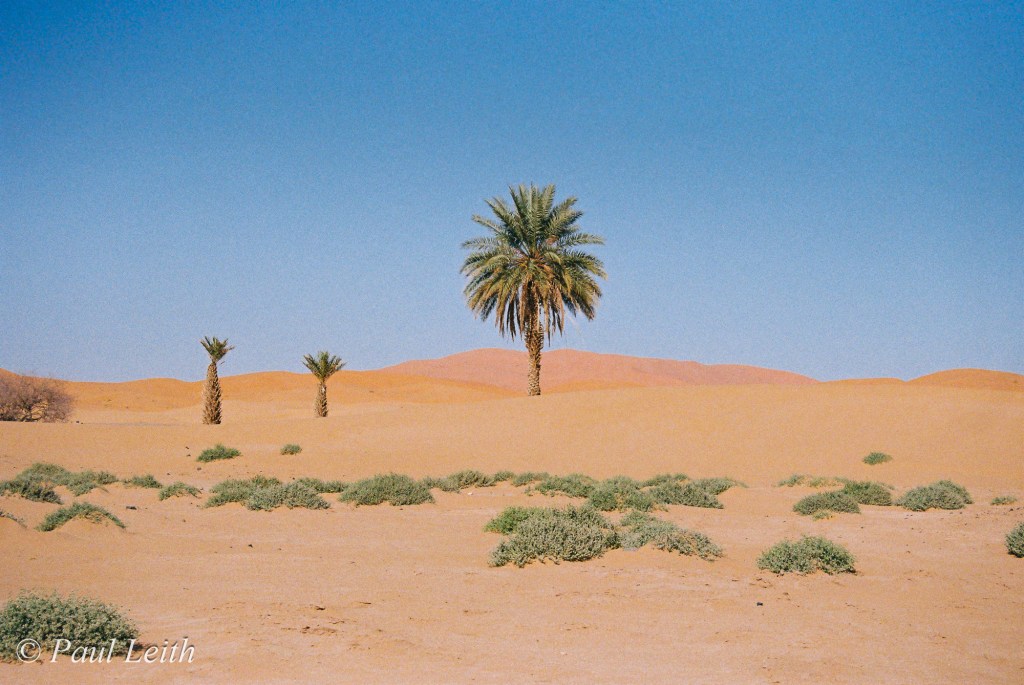
Human habitation would emerge only where there was water, with small narrow oasis strips at the bottom of steep canyons and gorges … the massive solar power installation beyond Ouarzazate seemed to be the only obvious industry capitalizing on the abundant clear skies and blistering sun.
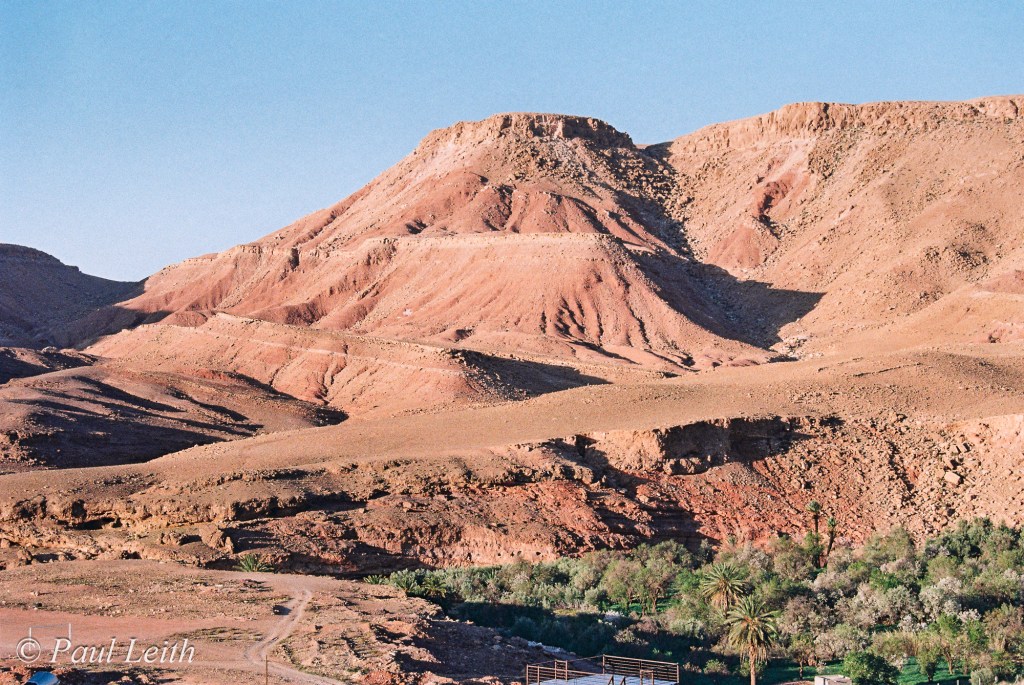
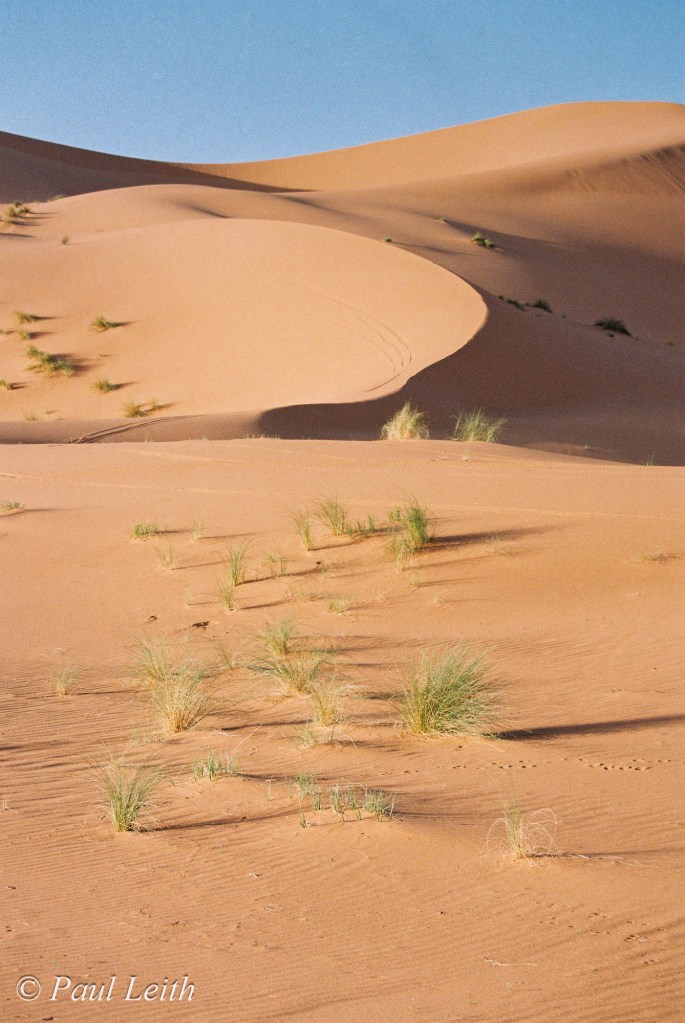
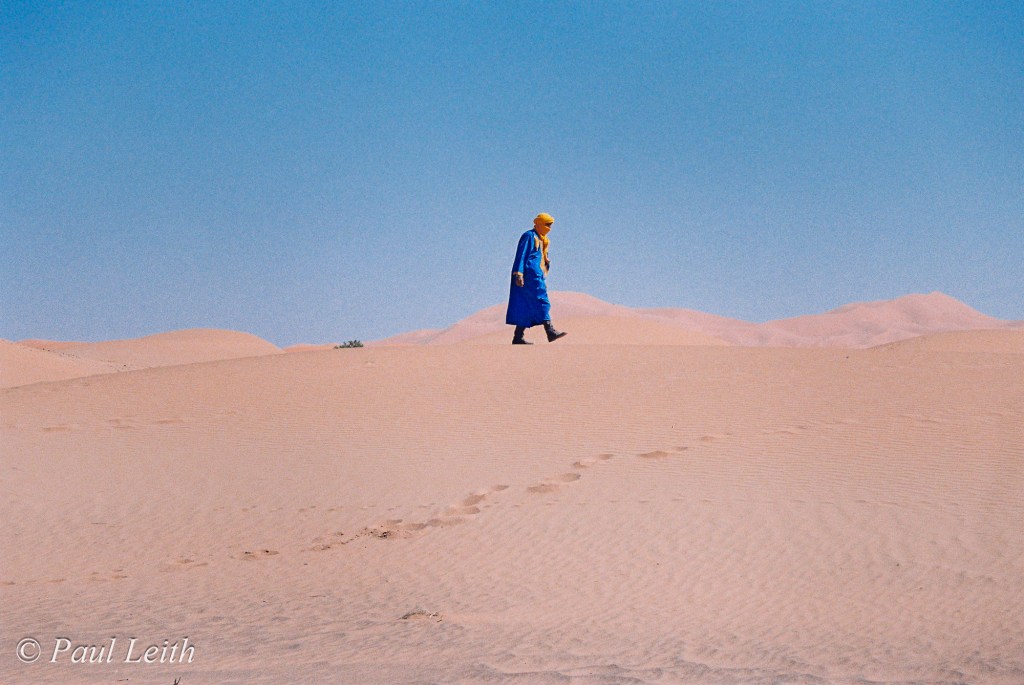
As we got closer to Merzuga, the shear enormity of the Sahara dunes in the distance became obvious … the dunes here can reach up to 150m / 490 ft high ! Over the next few days, I got to experience the roller-coaster thrill of being driven up & down the dunes in a 4×4. Other than renting a quad or taking a camel ride, there’s actually no other way of getting into the heart of the dunes.
My hiking boots were indispensable for ankle support while traversing the dunes and getting in the right location. Meanwhile my medium-sized hiking bag with all its multiple internal pockets was crucial to both protecting and finding photographic equipment efficiently in the heat.
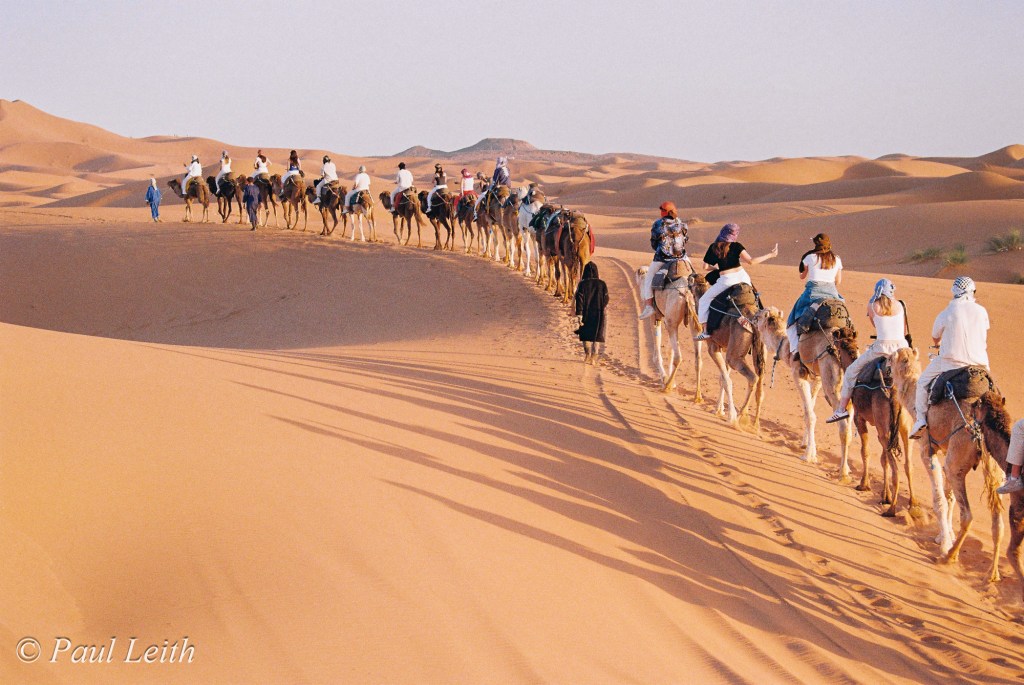
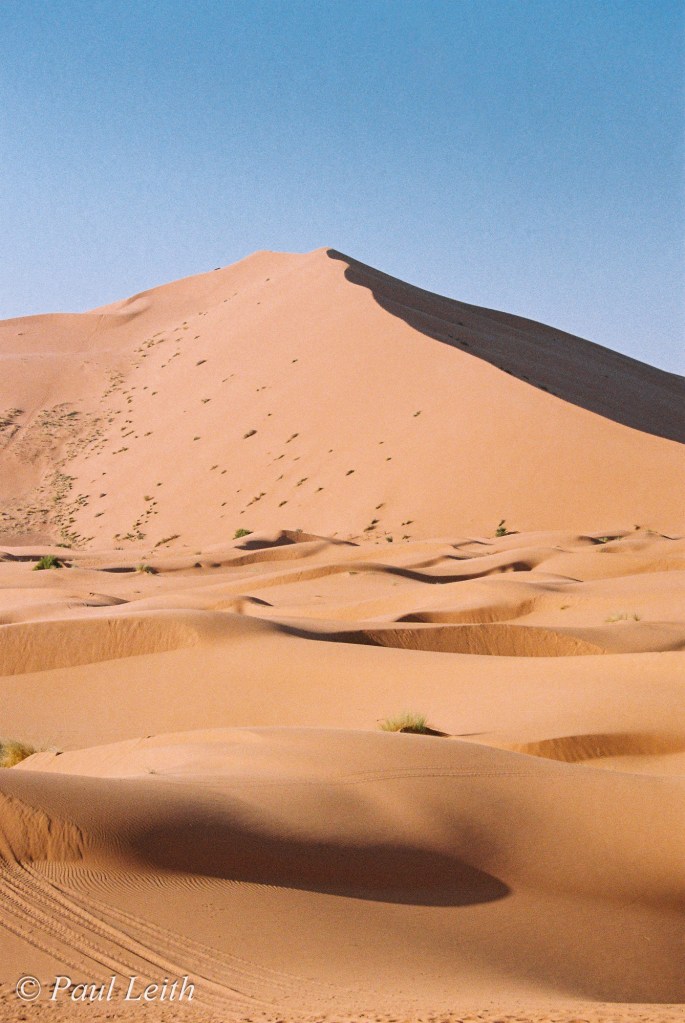
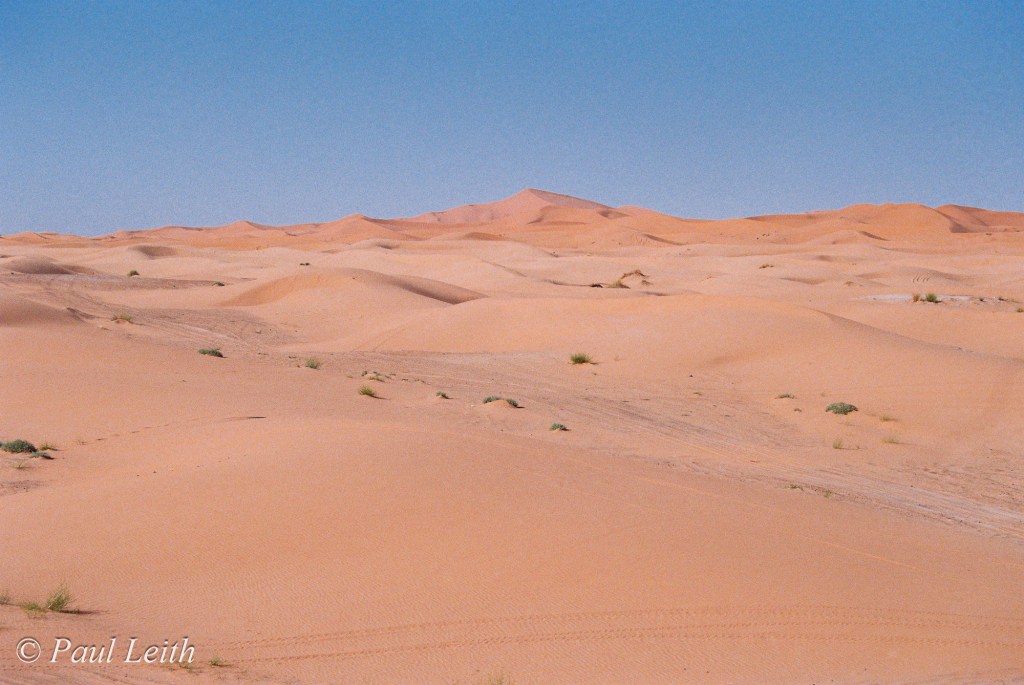
A fascinating aspect of the dunes is how they change colour during the day, and how the sand in particular locations have different hues, ranging from yellow to rose-gold to champagne.
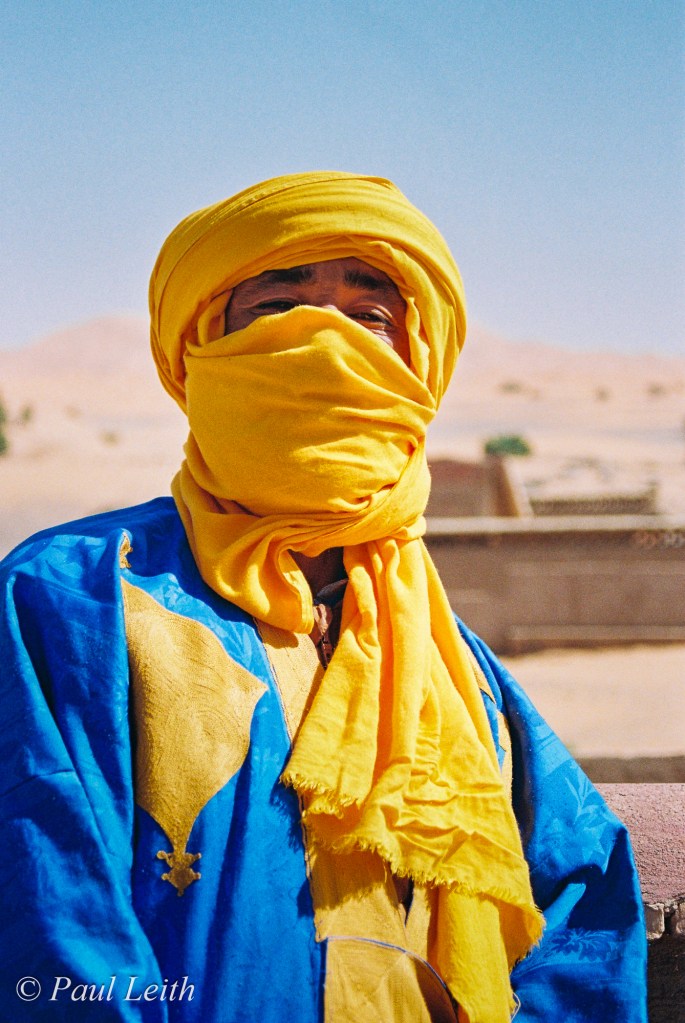
To end the amazing photography trip to Morocco we had an opportunity to meet a local, who wore traditional dress, which I got a chance to photograph. What impressed me most was how friendly and amenable he was, and how Moroccans can seamlessly switch from local dialect to French to English and then to Spanish. Mind blowing linguistics!
Conclusion
I still have so many photos which I didn’t have space to include in this blog, however, hopefully you get the idea: my photography trip to Morocco was immensely enjoyable, and left me with such a positive impression of the people and the country. If you ever get a chance, go and visit !
A big thanks again to Rodney O’Callaghan Photography tours, and also my good friends at Printpoint in Limerick for their amazing film mail-service 🤩
Until my next blog, keep shooting film ! Paul
