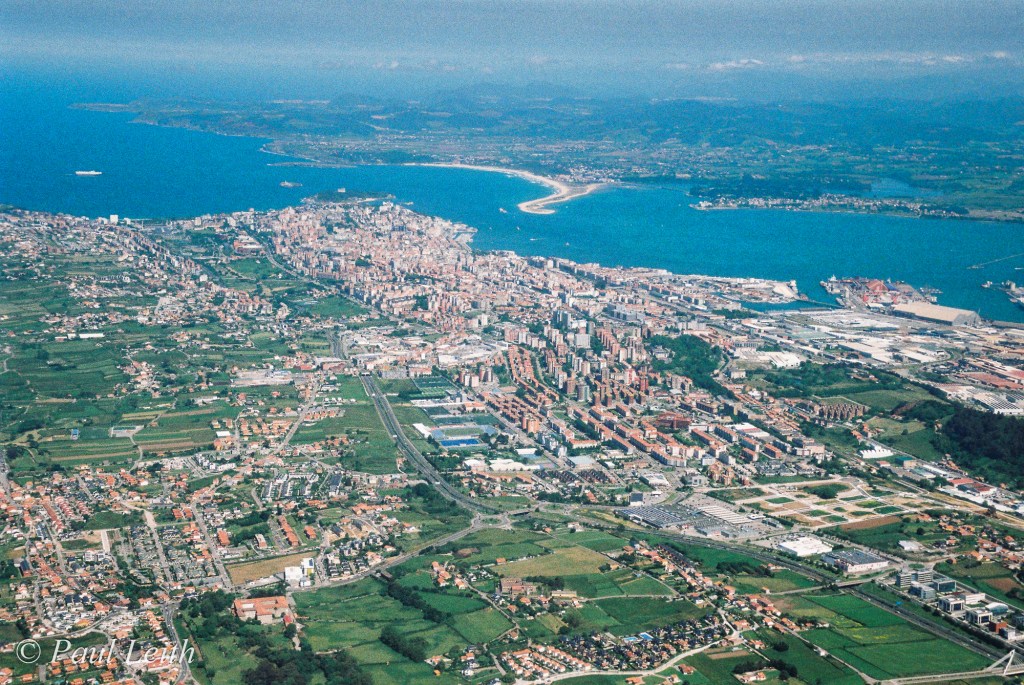
Welcome to Part 2 of my exciting hiking adventure across villages & towns of the Spanish principalities of Cantabria and Asturias, where my Nikon F75 and a couple of rolls of Fujifilm C200 encountered one beautiful scene after another along the northern coastline.
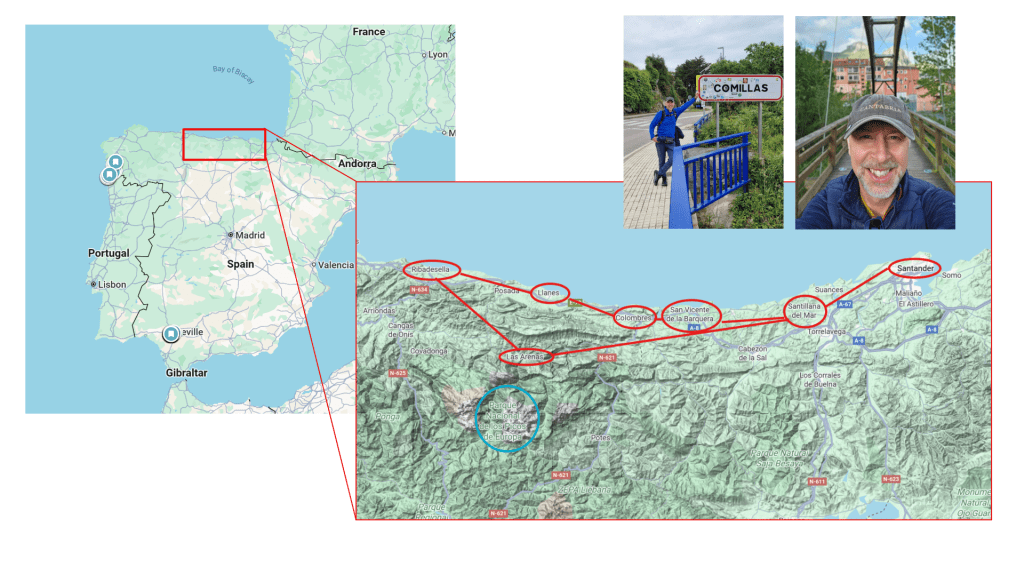
A quick note that the details of my photographic equipment (and rationale) and an overview of the multi-day trek can be found in Part 1. In this next instalment, I want to bring you through some helpful lessons – learnt as I hiked through rural villages, terrifying river gorge walks, and the sights & sounds of Santander city.
Coves & Cliffs
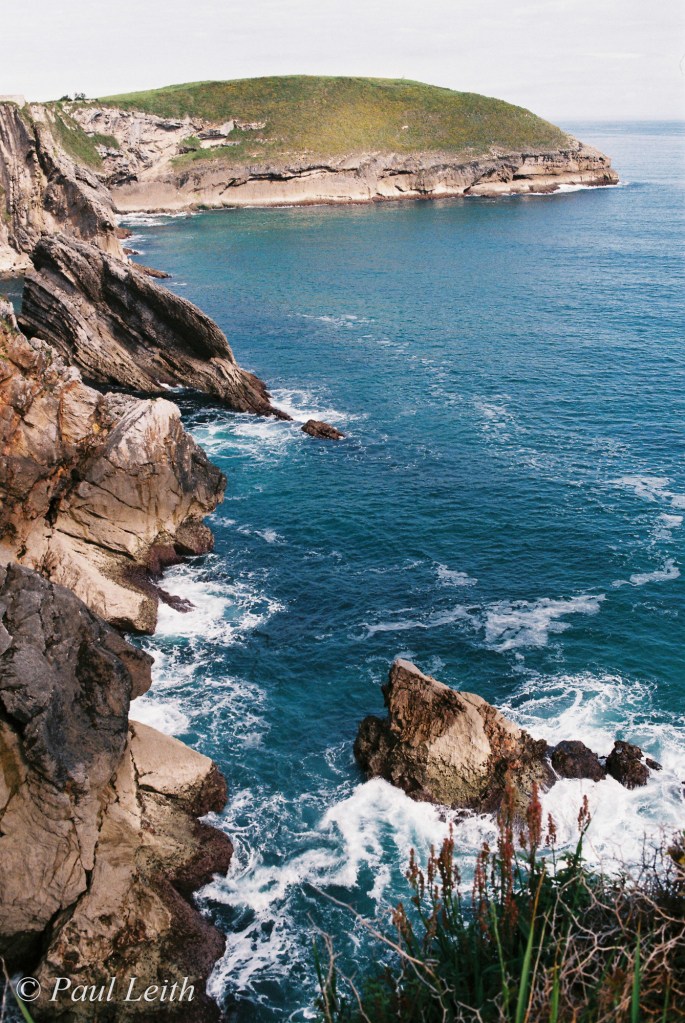
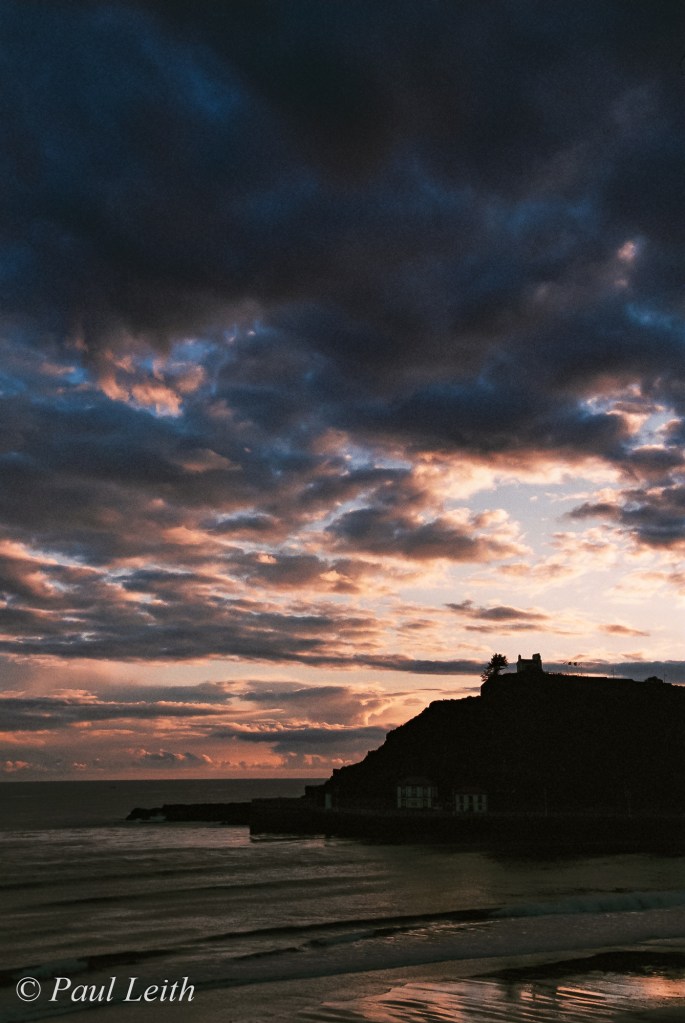
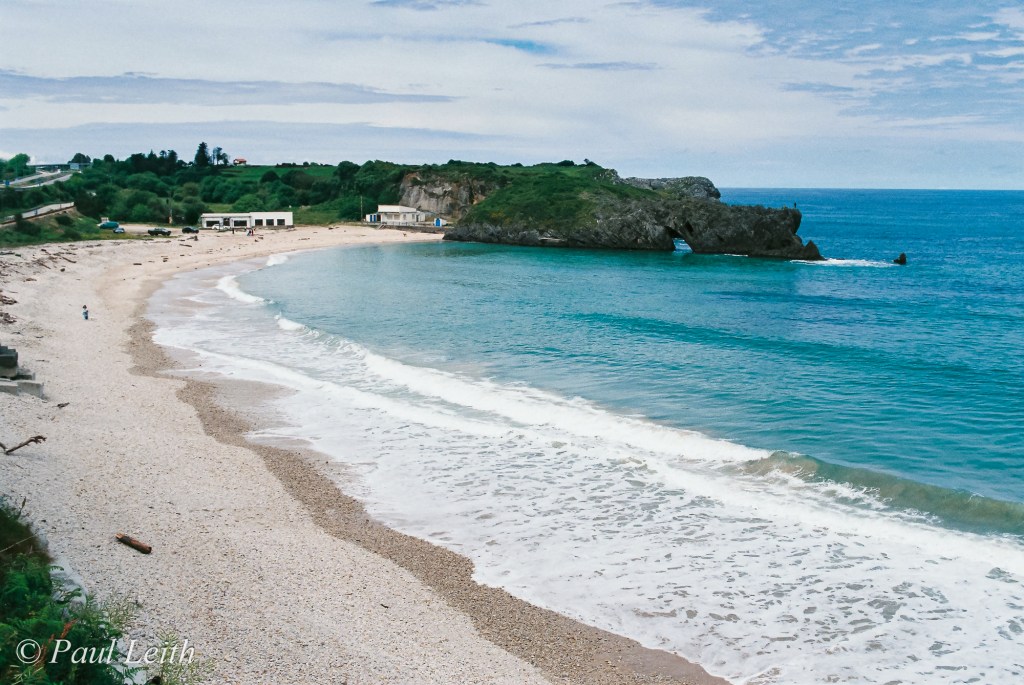
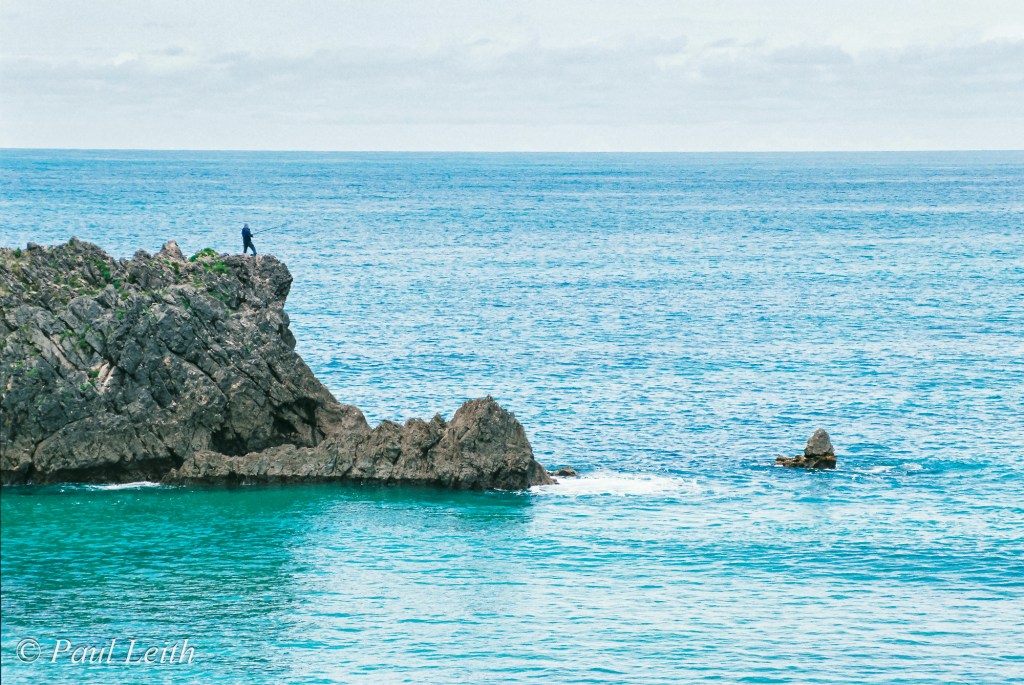
The hike between Llanes and Ribadesella was spectacular, with myself and my wife often walking through a secluded eucalyptus plantation to suddenly emerge into an azure coloured cove with either spectacular cliffs or golden sand. Sometimes these coves would occasionally feature somebody rock fishing, a lone boat being pushed out to water, or simply fellow hikers taking a break in the shade enjoying the cool breeze.
That all said, let me digress a little moment, and explain how carrying my film camera on days 1 & 2 of the travel soon became a bit of a mess …
You see, my excellent Decathlon hiking bag was split into two compartments, one of them 1/3 in size and the other 2/3, and both with separate dedicated zips. My plan was for the bottom 1/3 compartment to be my everything film photography storage and literally everything else for the days hike in the other larger compartment (or attached to the outside of the bag).
On day 1 of the hike, this seemed to be working reasonably well as I concentrated on navigation and absorbing the sights & sounds of the Spanish countryside. If I saw something interesting, my routine was: stop, take off the hiking bag, open the 1/3 sized compartment, grab my Nikon F75 & snap, put the camera back, and put the bag back on my shoulders. Easy.
However, as Day 2 wore on, I soon noticed that I was taking less & less film photographs, and instead taking more snaps on my mobile phone … nooooo! It was obvious that the process of getting my Nikon F75 out of the bottom compartment of my hiking bag was becoming an encumbrance, slowing things up too much, and essentially becoming a chore.
This was a very important photography life-lesson: if your camera isn’t accessible, it’s just going to stay in your bag ! So in the next little village I bought a cheap ‘bum-bag’ / ‘fanny-pack’, which was just the right size to fit my F75 and a 35mm prime lens. It worked perfectly for the remaining 4-5 days of hiking & city walking, with ad-hoc film photos .
CavAdonga Lakes
Time to change pace … nestled amongst the Picos de Europa mountains, are two very interesting sights within close proximity to each other: Santa Cueva de Covadonga and the Covadonga Lakes.
Santa Cueva was quite the experience … centred around a holy cave & waterfall, I stood there in shock, wondering how on earth did a massive Catholic basilica and all it’s accompanying administrative buildings, visitor centre, museum restaurant suddenly drop in this remote mountain location! It was truly fascinating to wander and explore, with the museum being home to quite an incredible collection of religious & historical artifacts.
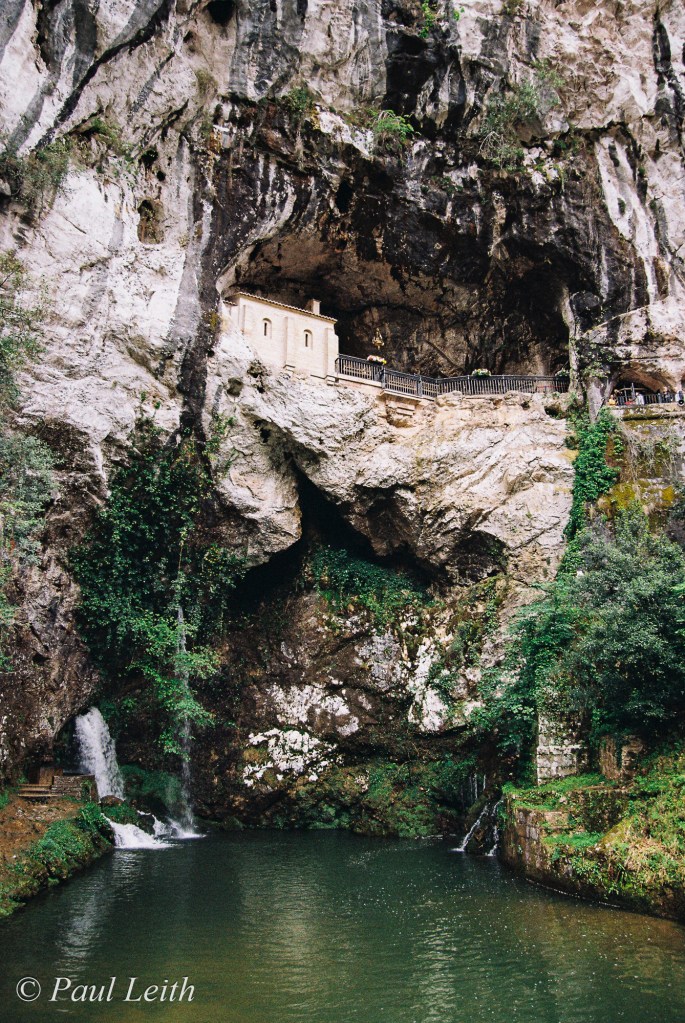
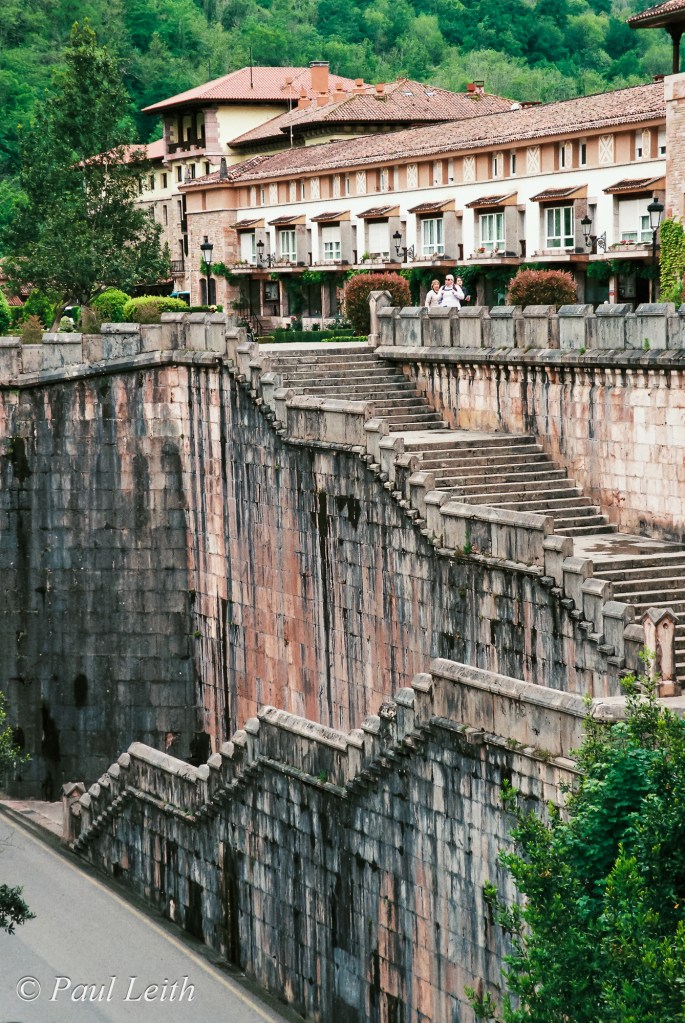
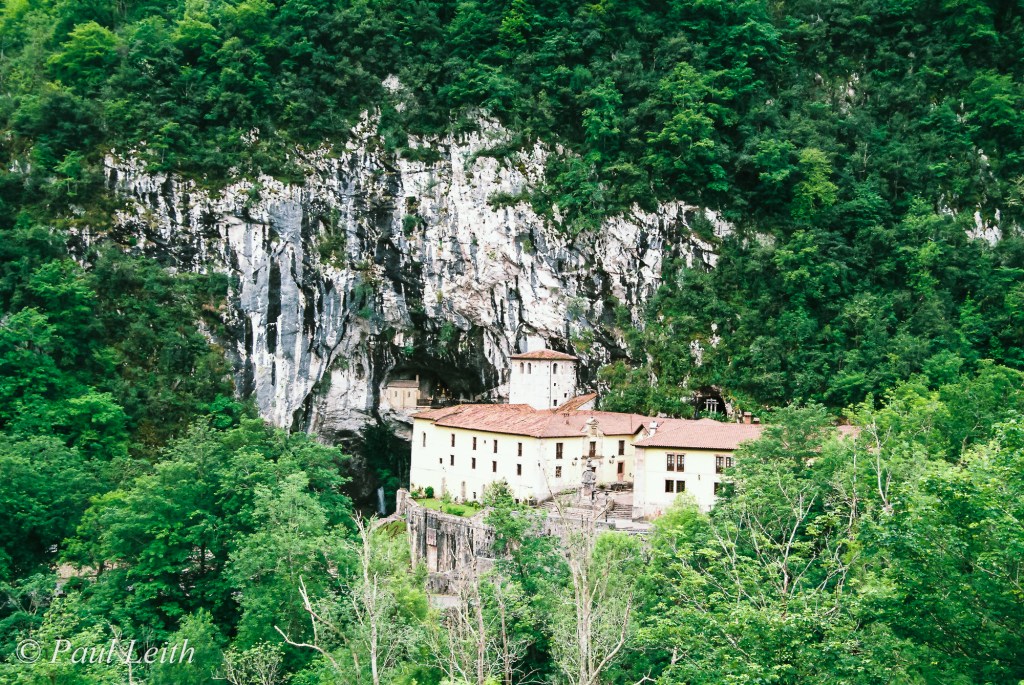
The location really tested my photography skills, and thank goodness I had a 28-80mm zoom on my Nikon F75, as I found myself running at both ends of the focal length – this was NOT a location to be stuck with a standard prime lens.
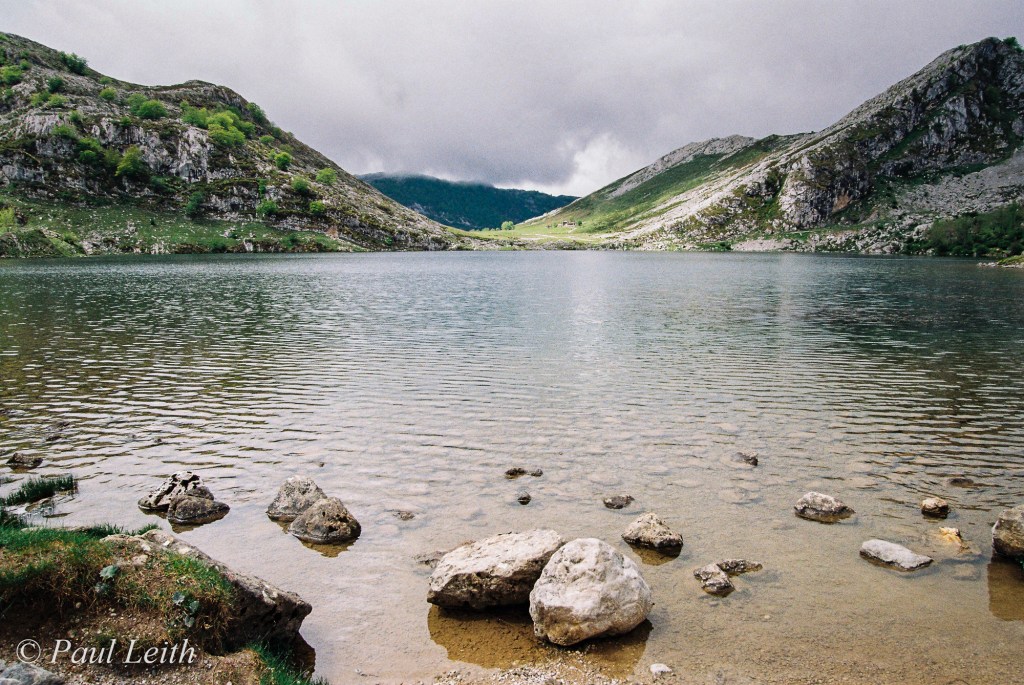
The star of the show were the Cavadonga Lakes, nestled amongst the bright grey limestone landscape, that formed over 25,000 years ago. Lake Enrol in particular is beautiful, and just before the low cloud rolled in and engulfed the location, I managed to grab a couple of photographs from above and at the lakeshore.
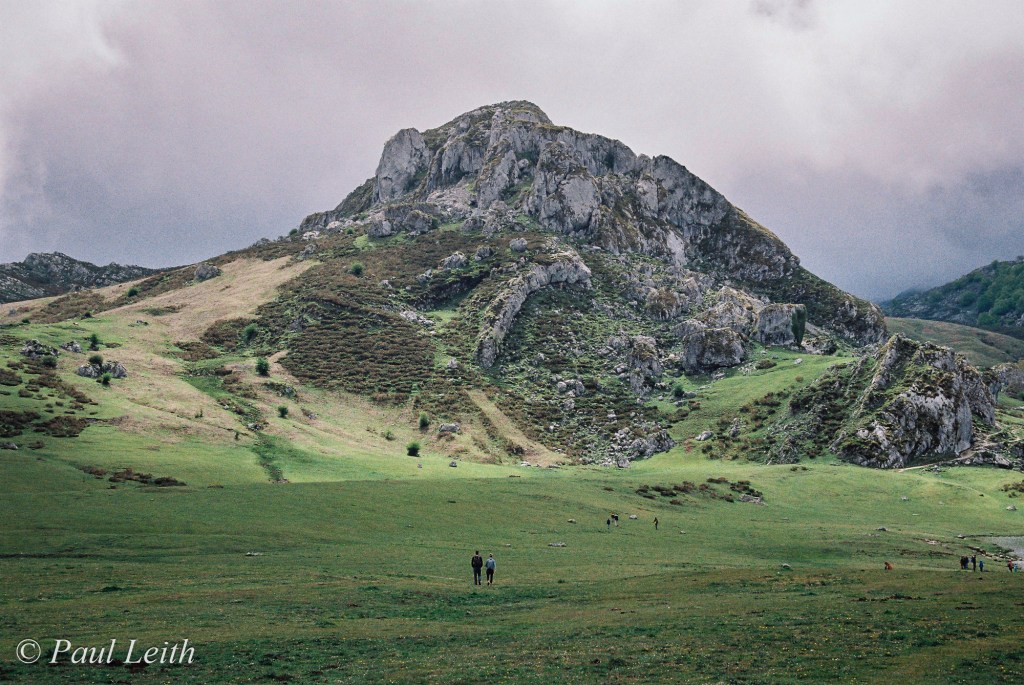
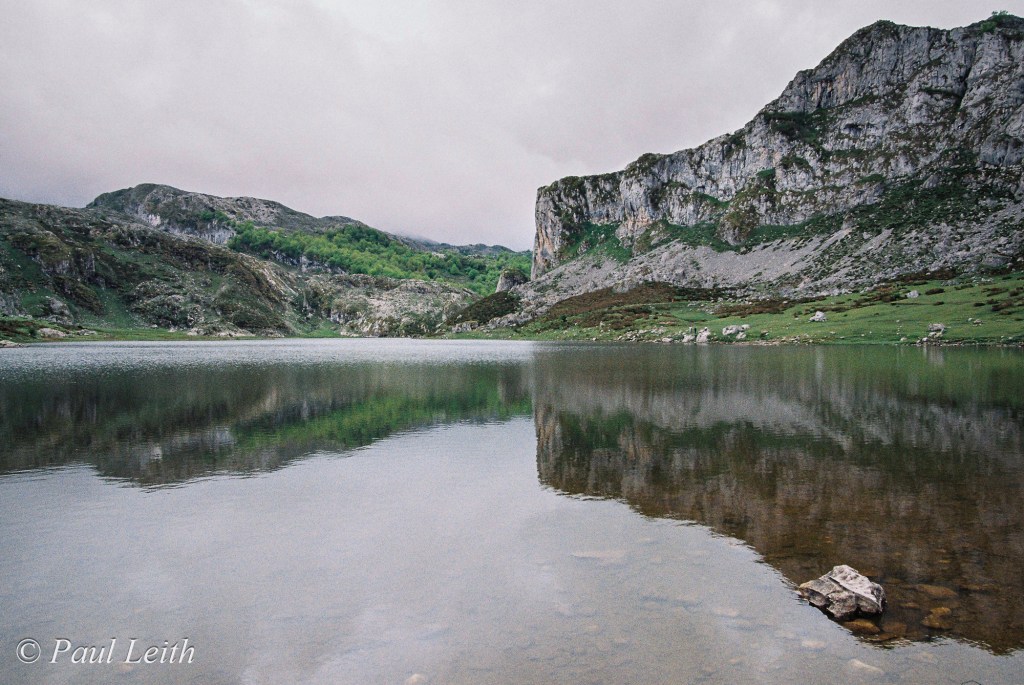
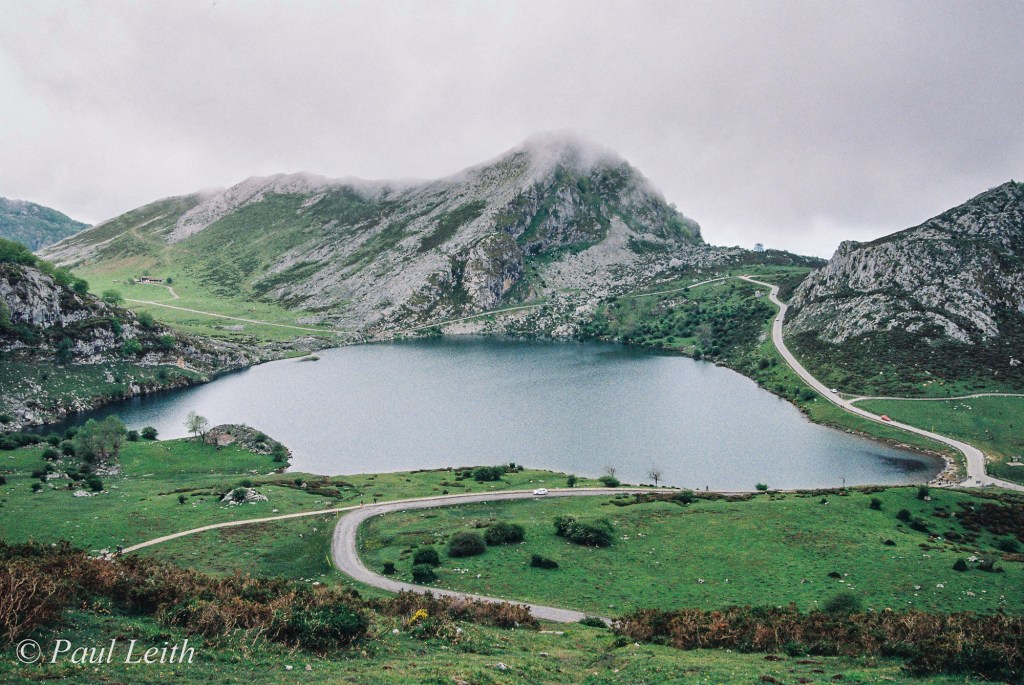
What surprised me was how quiet the area was, with us being told that during peak season it’s impossible to get parked let alone get a bite to eat due to lengthy queues. Also to be fair, it was cold … a lot colder than expected up there, so once that cloud rolled in, and the sun disappeared for good, we didn’t hang around too long.
Now in case you think I’m finished talking about my experiences in the Picos, hang on, as the fun is only beginning …. as you’ll find out next 😲
Cares Gorge
A couple of months before making the trip, I stumbled upon YouTube videos of terrified tourists trekking through the now-famous Cares gorge … a nerve-wrecking, cliff-hugging, 12km trail that can be at times 200m+ / 650ft high above the Cares river below it. I just had to visit the location, since I was going to be ‘in the neighbourhood’ as such.
So I brought proper hiking equipment for this particular mini adventure – map, spare items, food & water, power bank, first aid equipment, rain gear (you never know), etc. As for my camera, I only brought my walk-about zoom, as I know from many mountain hikes that less is more.
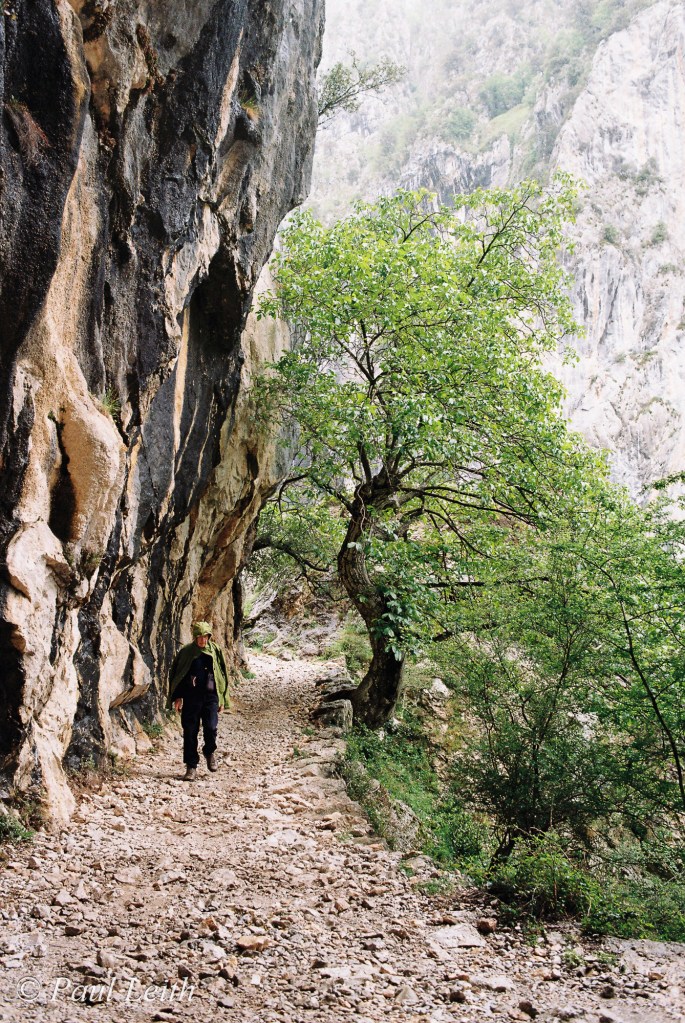
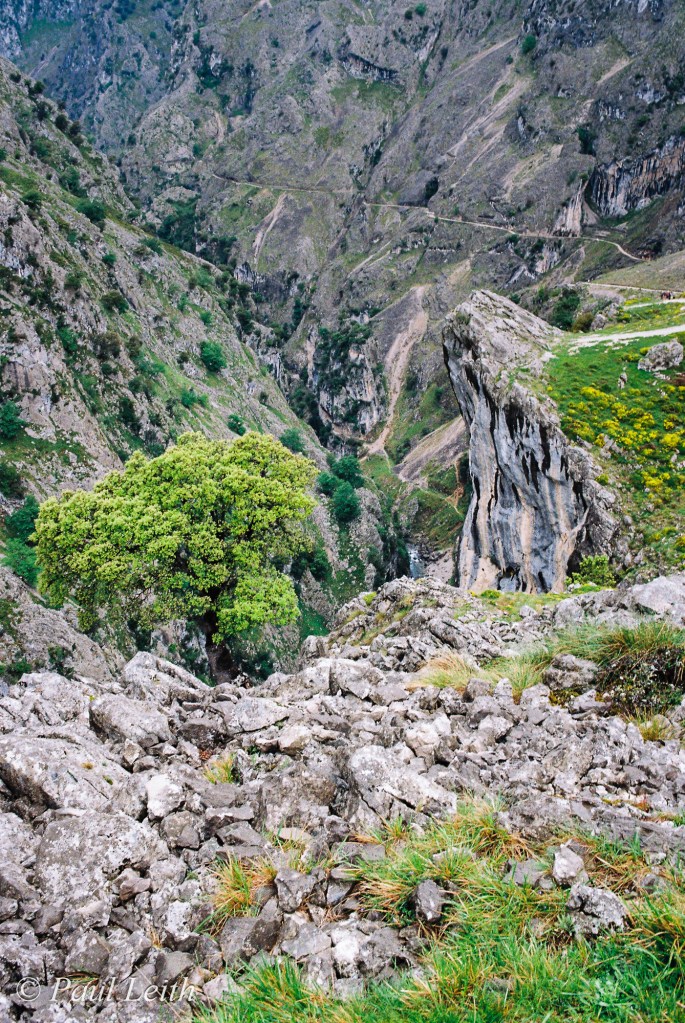
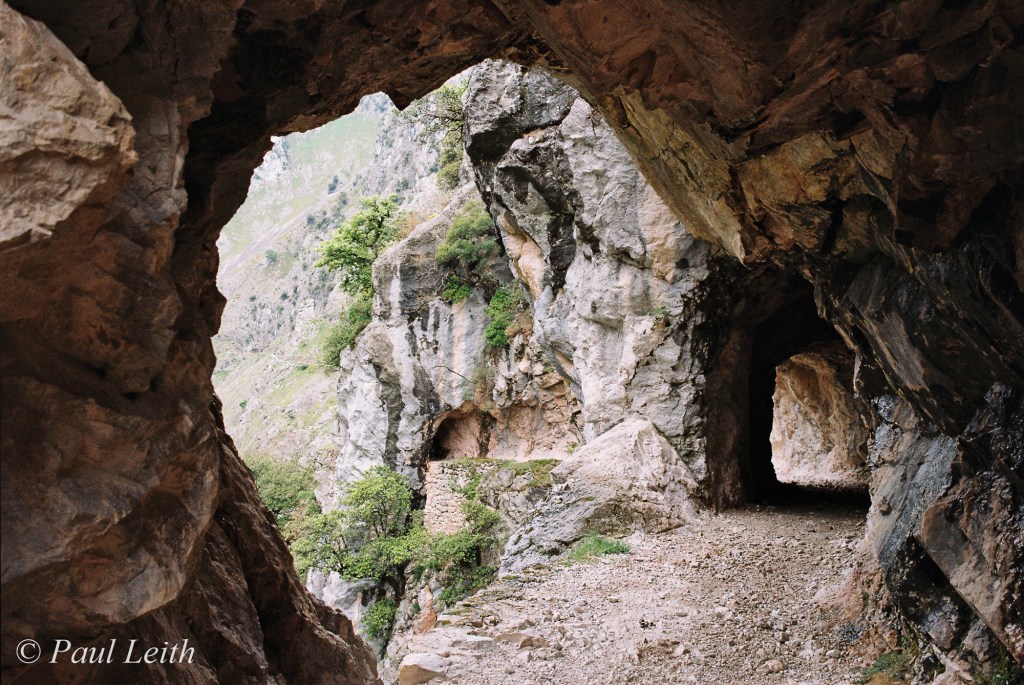
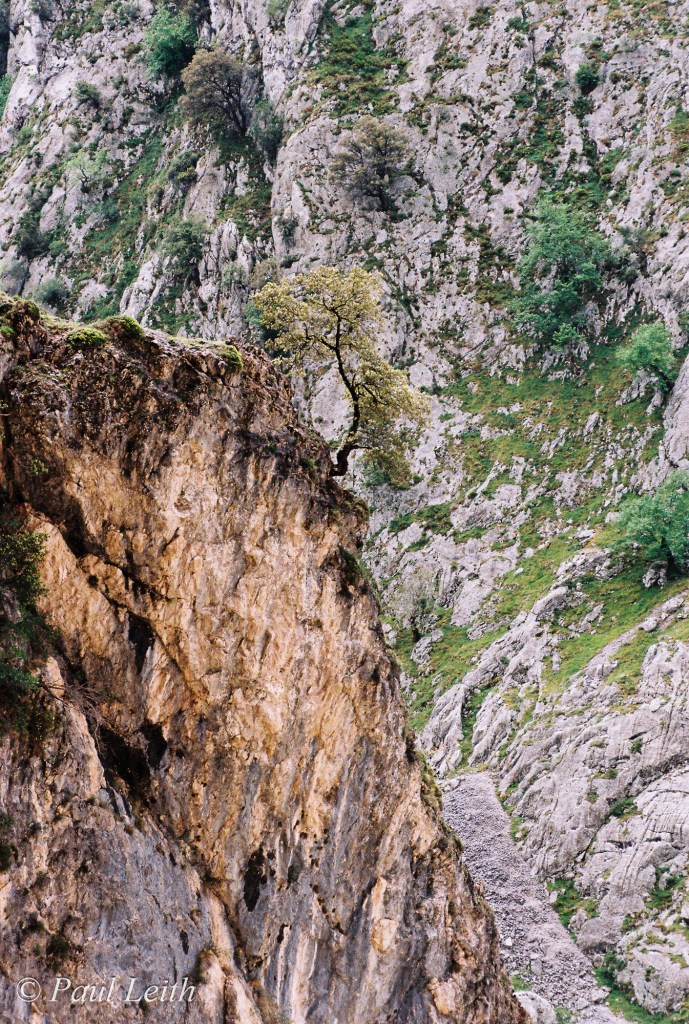
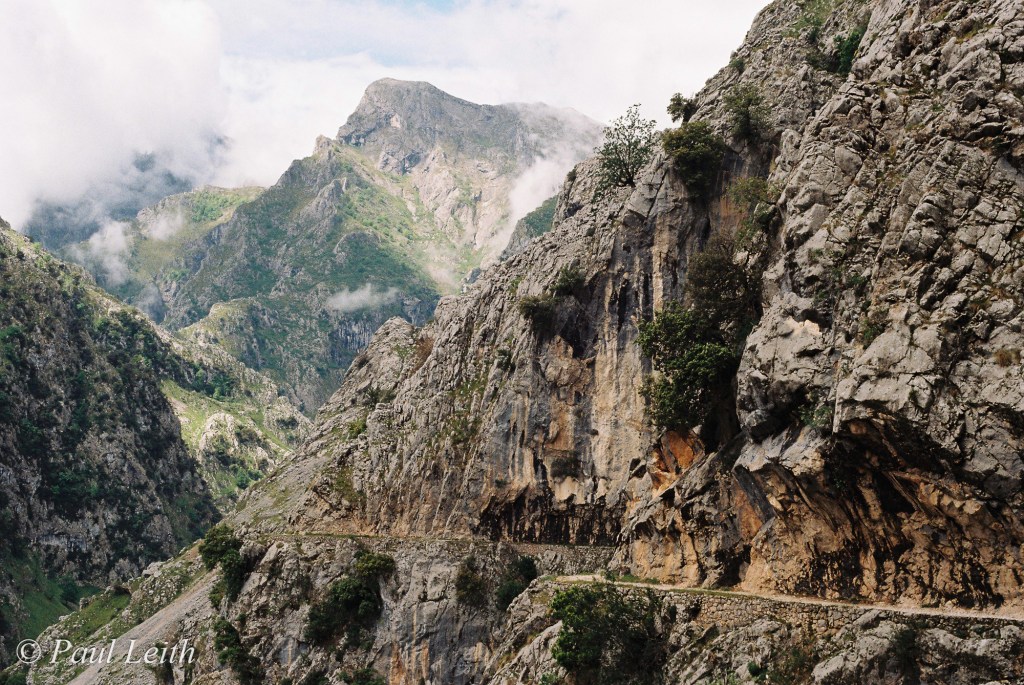
So let me confirm, yes, parts of the trail are scary … very scary ! I was shocked at how tunnels had been carved into the limestone rock, because there was simply nowhere else to walk, due to the vertical 150m+ drop below you 😱 This became all the more apparent when you met somebody on the trail coming towards you, and you both had to squeeze by one another … it was a case of who was going to the braver person to stand closest to the cliff face.
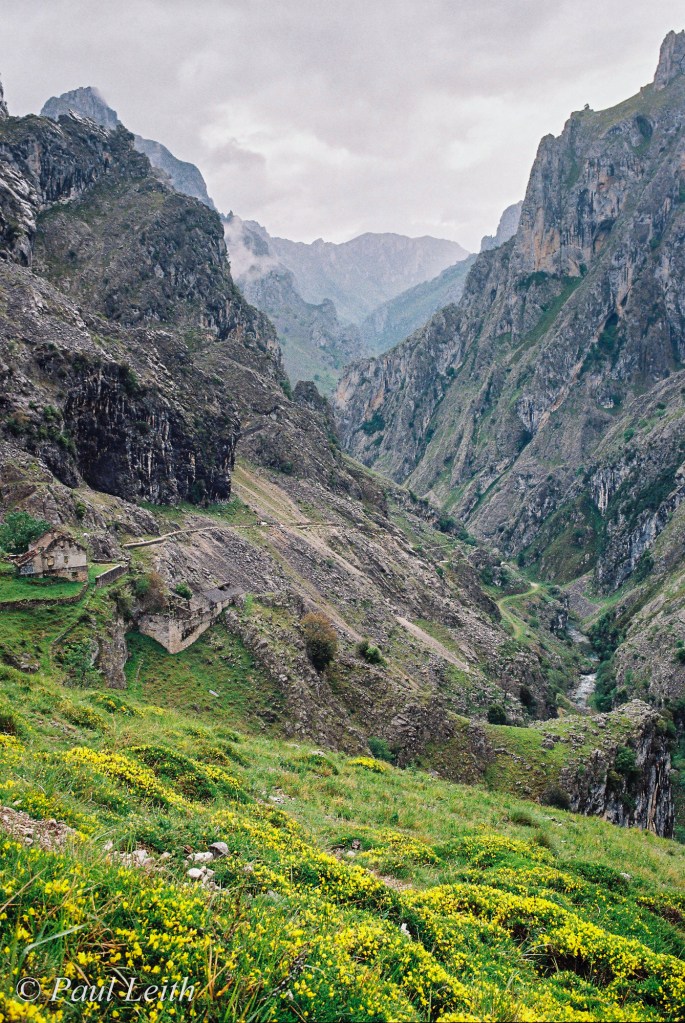
At the end of a few hours hiking out and back, I have to say the Picos de Europa were amazing on so many levels – the spectacular vistas, the flora & fauna, the adrenalin rush, and the surprises. Myself and my wife enjoyed a few drinks later that night at a local restaurant called Santelmo Cafe in Las Arenas, which served a delicious shared meal on what can only be described as a long plank of wood!
After this wonderful sojourn in the mountains, it was time to return once again to the Spanish coast, and stay a few days at the beautiful city of Santander.
Santander
Santander has often been described as ‘the Liverpool of Spain’, with it’s port having been a major influence over its wealth & history. We stayed close to the gothic Cathedral and the iconic Centro Botín (it looks like the Star Wars spaceship the Millennium Falcon) – we couldn’t have picked two landmarks so radically different if we tried 😄
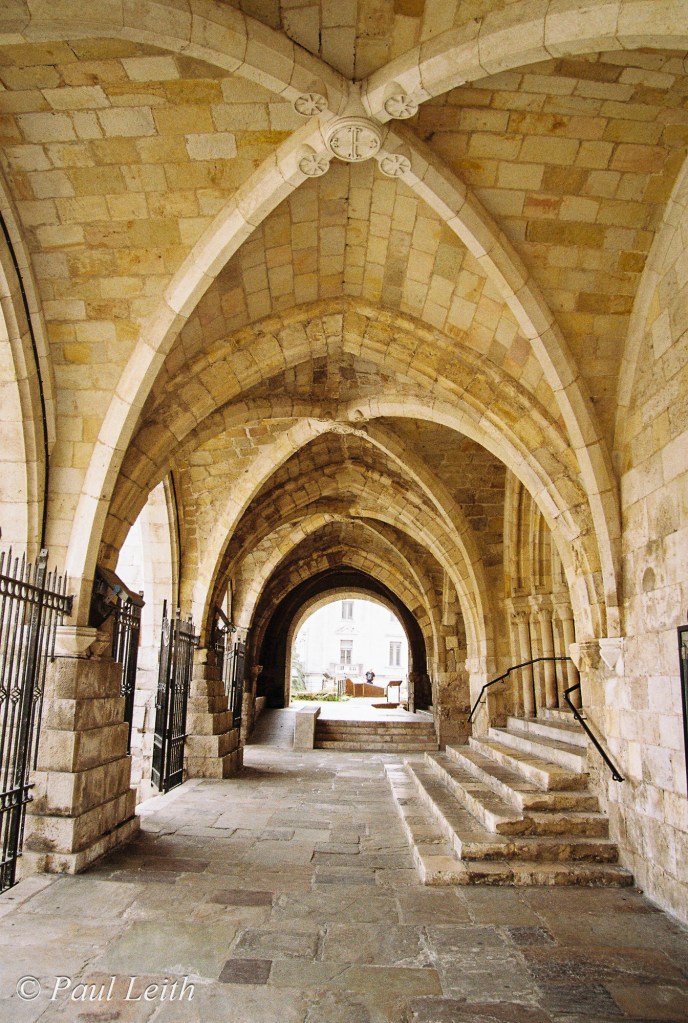
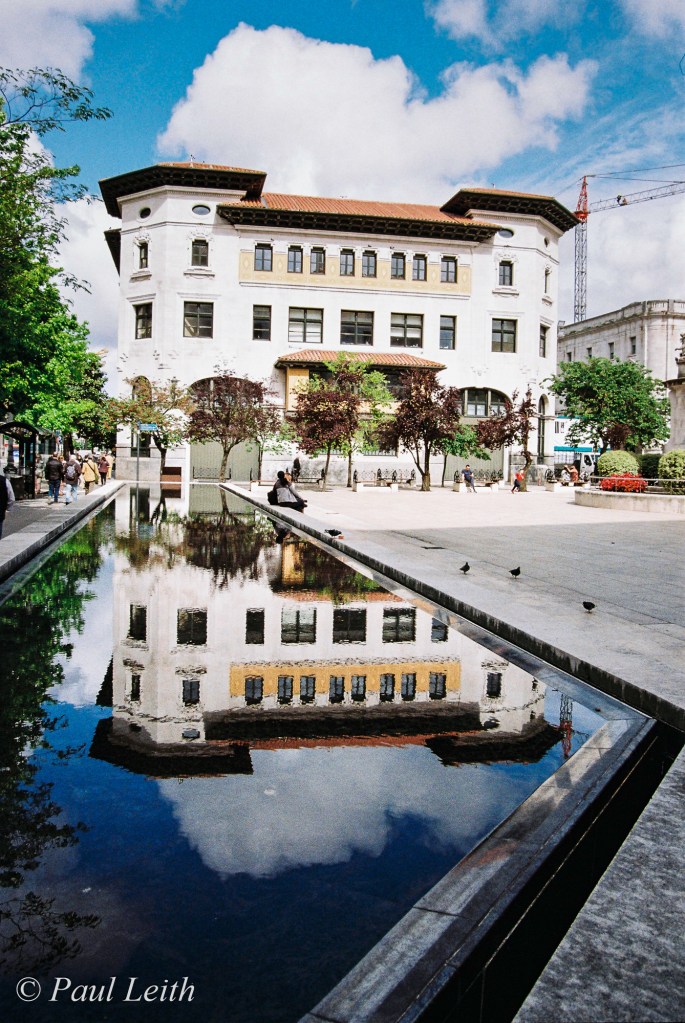
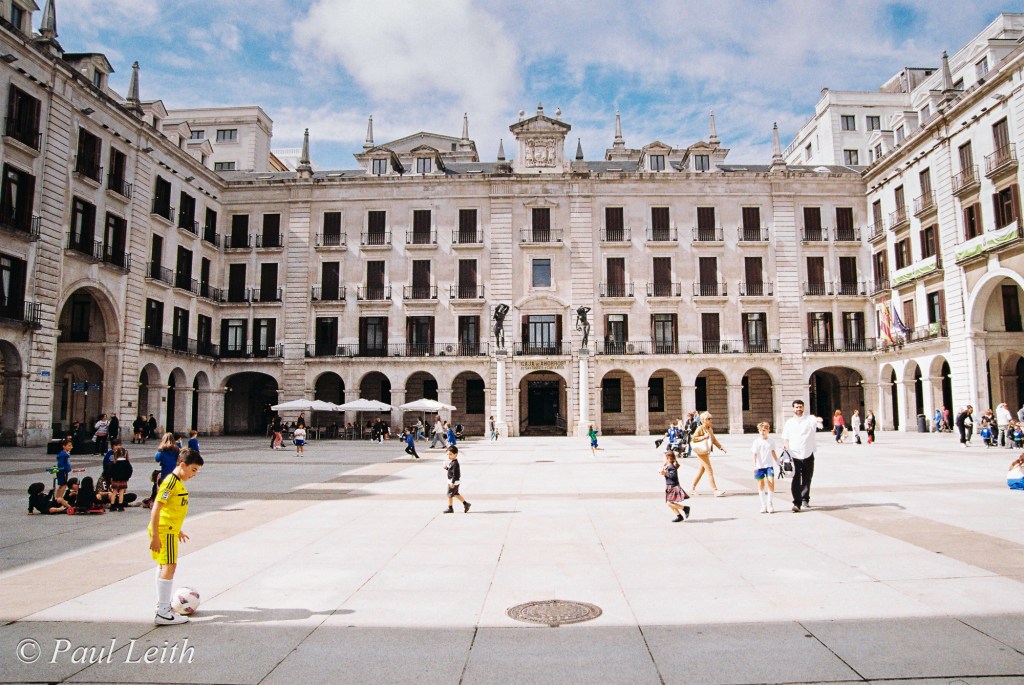
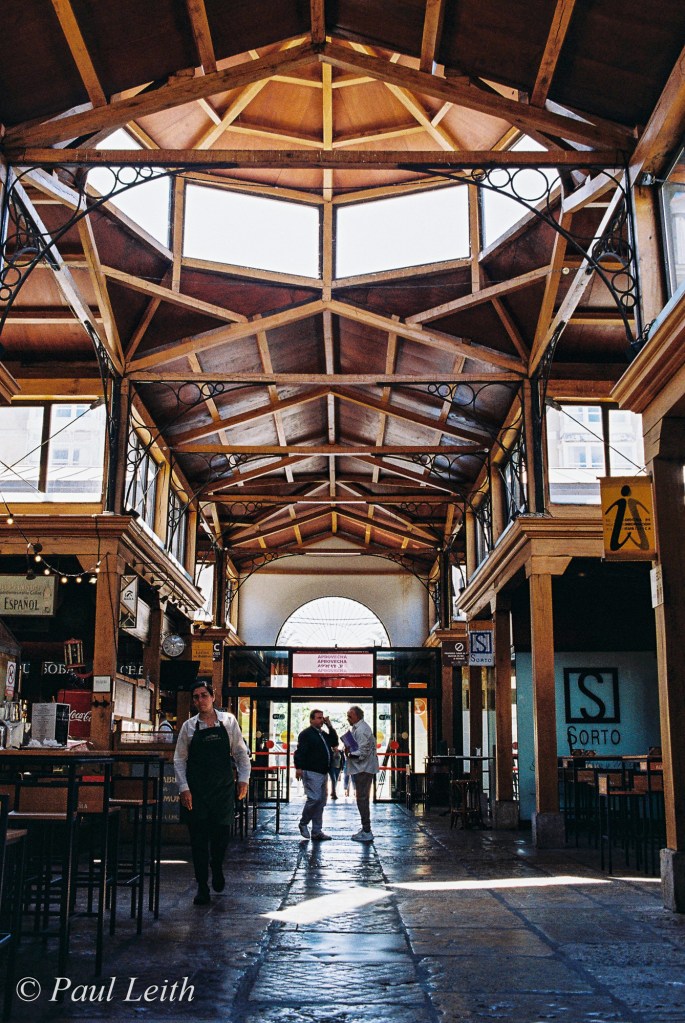
The city was such a joy to ramble through, whether watching the kids playing football in the repeating symmetry of the Plaza Porticada, or hiding from the midday heat in the Mercado del Esta to have some fresh tapas. Two things we quickly noticed were: a) how close everything was, and b) how reasonably priced everything was = a perfect city location.
As mentioned in Part 1, Santander was just a great mini city-break, with so much so see (i.e. photograph!) that I ran out of film. To that end I have to give a big shout out to the helpful & friendly owner of Fotografia Zubieta who sold me a few rolls of Fujifilm C200.
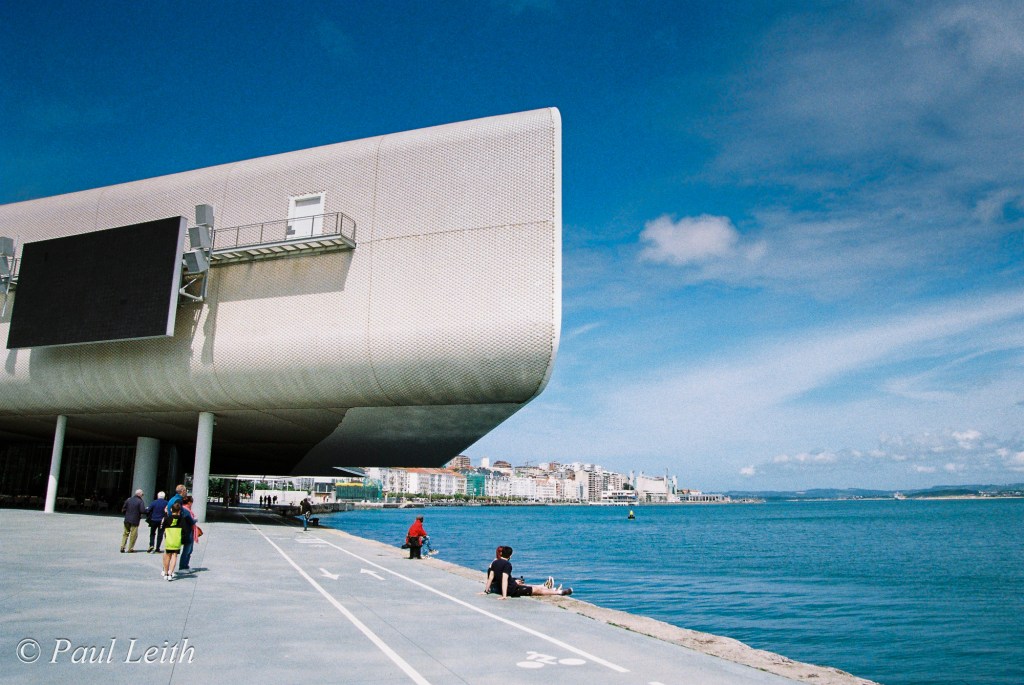
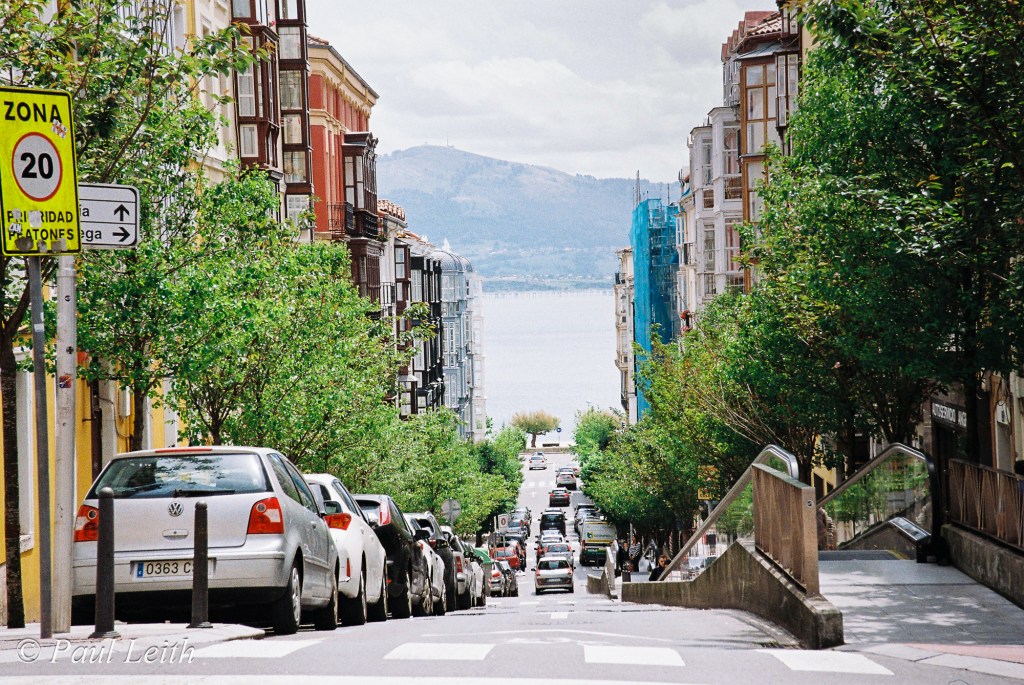
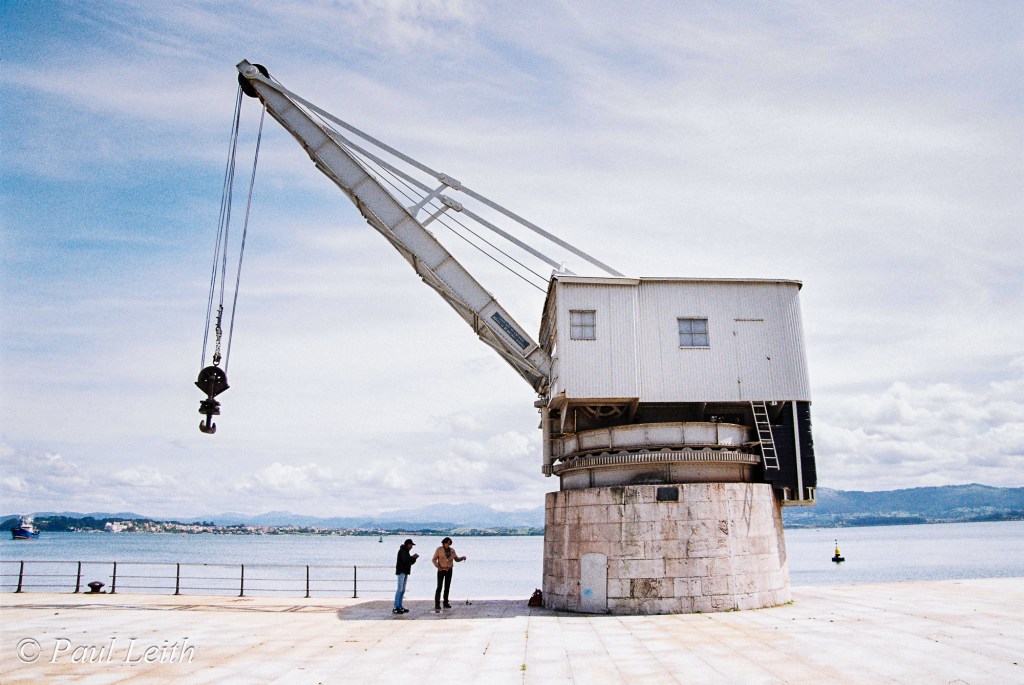
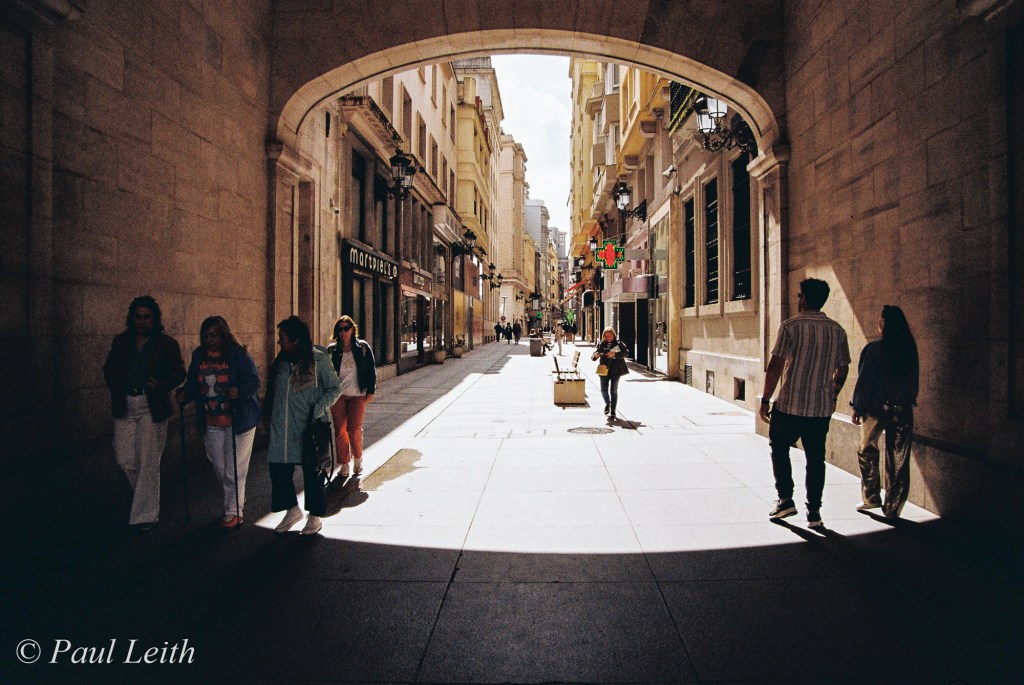
A surprising feature of Santander was how pedestrian friendly it was, with travellators on some of the public paths to reduce the trudge of the inclines to streets on the higher levels, while the seafront park was a welcome throwback of greenery right at the waters edge, in an otherwise busy functional city.
Conclusion
Writing this 2 part blog, double & triple checking my notes, piecing together the best of my film photos has definitely taken a lot more time than expected, however there has been something theraputic about writing it all down and sharing it.
I hope that sharing my experiences over this 120km hike, and the beauty & wonder of Northern Spain might inspire you to visit. Don’t forget to pop across to my good friends at Magic Hill Holidays if you’re interested in doing a Camino / multi-day hike. In the meantime, as always, keep shooting film!
Paul