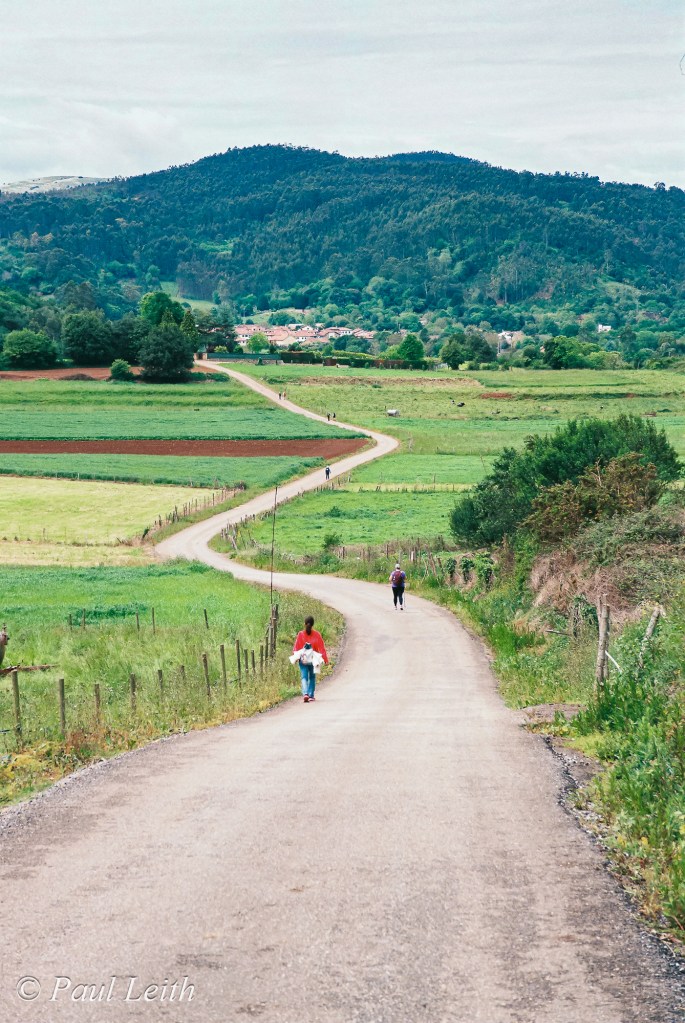
I’m very excited to bring to you a two part blog, sharing my wonderful adventures on film, as myself and my wife hiked 120km across the northern Spanish coastline and a bonus day-trip into Pico’s Mountains. Many of you might immediately recognize this as the “Camino”, and you’d correct.
The Camino is an ancient pilgrimage walk, for which the final destination is the Spanish city of Santiago De Compostela, regardless of whether you took the North, English, French or Portuguese routes to get there. To that end, a big shout-out to local Irish company Magic Hill Holidays who helped organize all the accommodation and logistics, so we could concentrate on the walking and enjoying the experience.
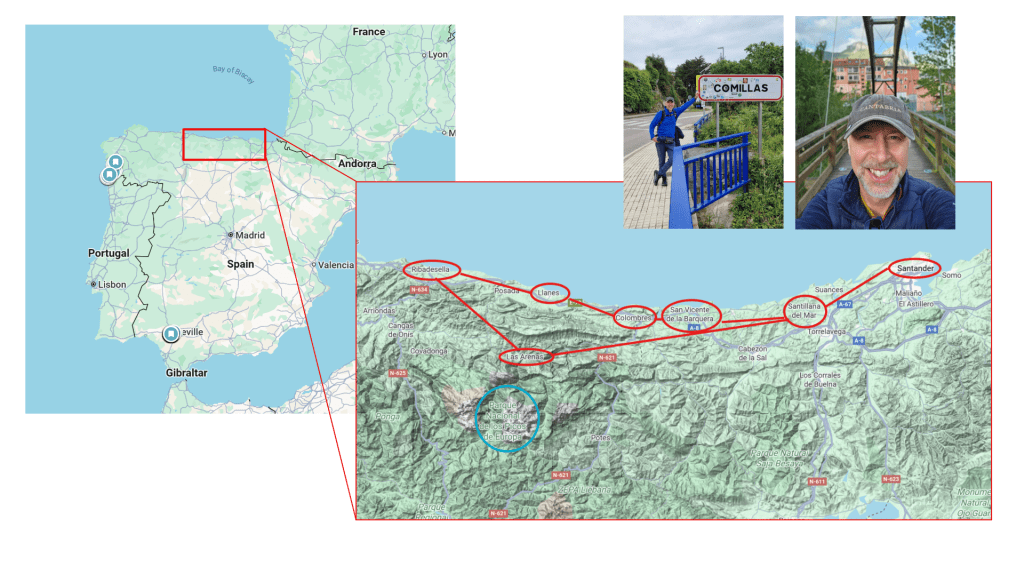
As you can see from the map above, we took a hiking route between Santander and Ribadesella, which featured beautiful eucalyptus tree plantations, gorgeous beaches, quaint villages and rural farmlands.
Rather than being a full chronological exposé and boring you to tears, I’m going to focus on key themes & events along the adventure instead that were photographically interesting or challenging😇
Spoiler alert: a big takeaway from this experience for me was how film photography is still very much relevant, rewarding, and when on the road for days, not having to worry about low batteries or backing up memory cards is refreshing!
Photo Equipment
So when you’re facing a 5 day hike mostly along the coast, trying to decide what film camera equipment to bring becomes a critical factor in a) enjoying the experience, and b) being able to capture key moments along the way.
To that end, I brought the following:
- Camera: Nikon F75 (my blitz review here)
- Lenses: Nikkor 35mm (blitz review here) and my trusty Nikkor 28-80mm G walkabout zoom (blitz review here)
- Film: 4 x FujiColor C200 (my blog review post here) … and then I realized that by day #3 that I was rapidly running out, but luckily bought some more in Santander city.
While I’m a big fan of the Nikon N80 / F80 SLR, as it’s smaller & lighter than my Nikon FE2, the ‘newer’ Nikon N75 / F75 is even smaller and lighter again, with way better metering … so for 5 days on the road, the N75 won hands-down as the camera of choice. The exceptionally light 28-80mm G zoom lens covered all scenarios on the route, while the 35mm D prime helped with low-light situations, while still being able to capture the surrounding environment per se.
Cobbled Streets
It’s so remarkable being able to walk into a village and feel like you’ve been transported back in time, your senses awaken: you suddenly notice textures, shapes, light/darkness, colours and smells … the northern Spanish coastline offers this experience in abundance!
The first village to offer this wonderful adventure was Santillana del Mar, which the locals joke about the village name being a lie – there’s no saint and it’s nowhere near the sea 😄 I was so excited to ramble the cobbled streets, taking snaps on my F75 of the leading lines and interesting interplay of shadow & light.
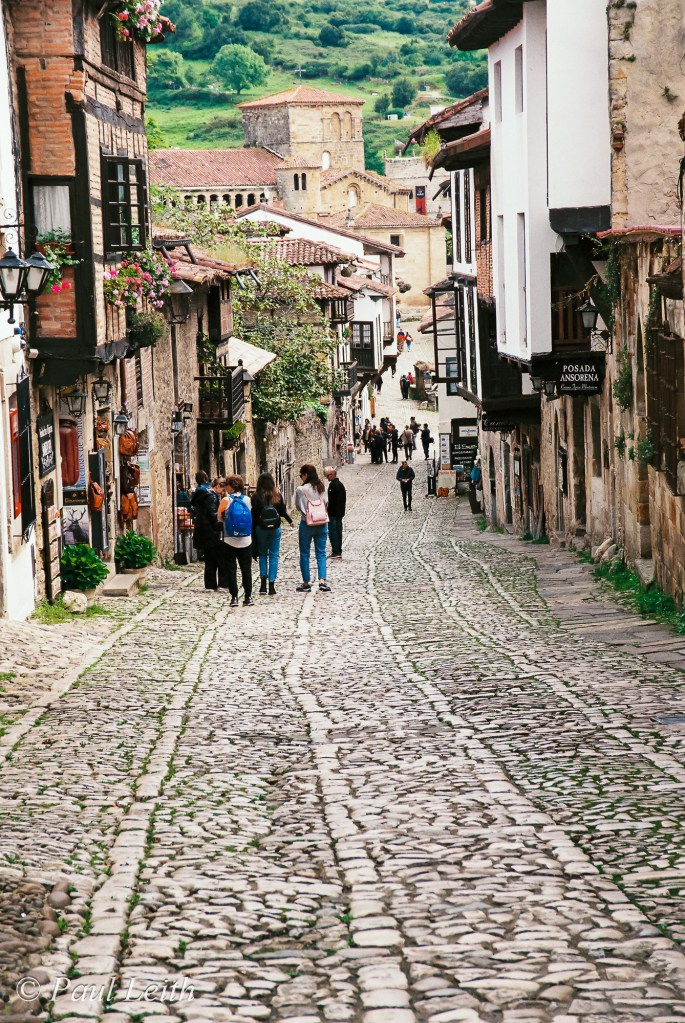

Other villages in the rural Spanish hinterland offered a mish-mash of architectural interest – quaint little brick houses with ornate doors, to narrow two storey buildings with large window tops trying to capture the sun. I was so happy that I had the the ability to grab these scenes on film, without fuss or ceremony.
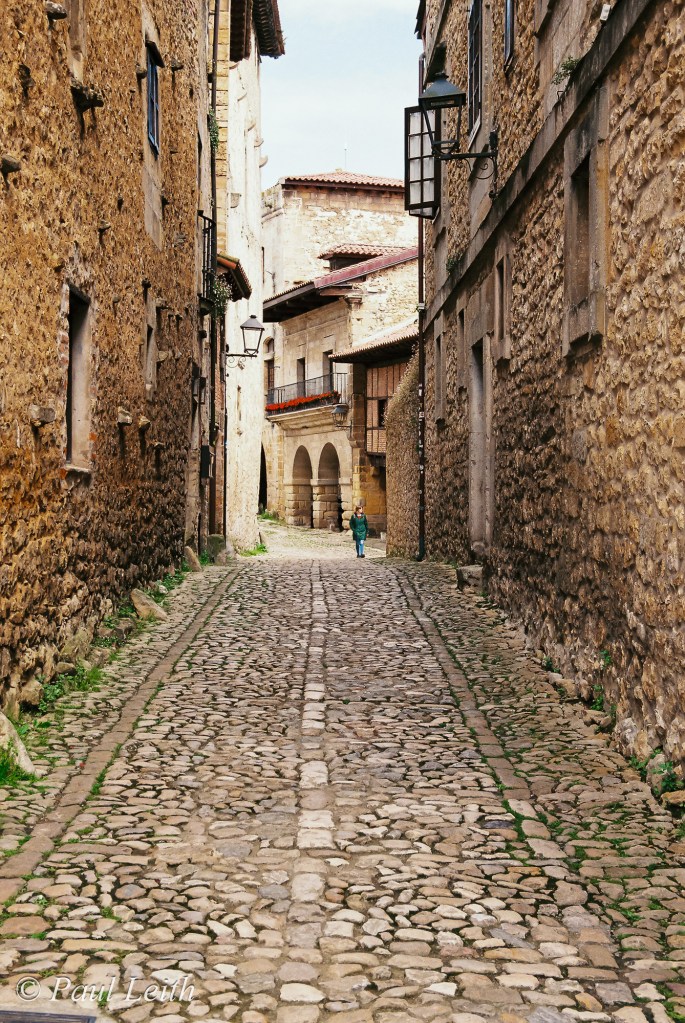
While the photography was amazing, I also have to say that some favourite memories were of our interactions with the friendly Spaniards and an array of hikers from all corners of the globe, at interesting cafes & local restaurants, which served interesting and varied meals each day.
Coastal Vistas
When hiking for days, having the sea present most of the time is a blessing – there’s usually a fresh breeze to keep you cool, soothing sounds of lapping waves, eye-caching golden beaches (usually with bars offering a cold beer) and of course big vistas out to sea.
One thing I realized when shooting a film camera while hiking along hot coastal by-roads was always the niggling concern that my camera was going to get too hot and the film would be damaged. After a little bit of online searching while in a Spanish small tavern I found out that FujiColor C200 is safe at any temperature below 15 C / 59 F … so as long as I wasn’t leaving my camera sitting in the midday sun I was fine.


I really enjoyed these coastal scenes and prior experience has taught me to add 0.5 to 1 stop of additional exposure, as you need those waves & foam to be shimmering white, not light grey.
The funny thing about trails that bring you down to the beach is that sooner or later you have to hike back up, it was always the bitter-sweet trade-off of getting those nice reflections in the wet sand.
Rural Farmland
An unexpected element of the hike from Santander to Llanes was the occasional diversions into the rural farmland areas, which would feature either cows or perfumed eucalyptus trees. For the most part these tree-lined trails were a welcome break from the heat, getting some much needed shade.
I was always on the watch for leading lines or natural framing … 😇
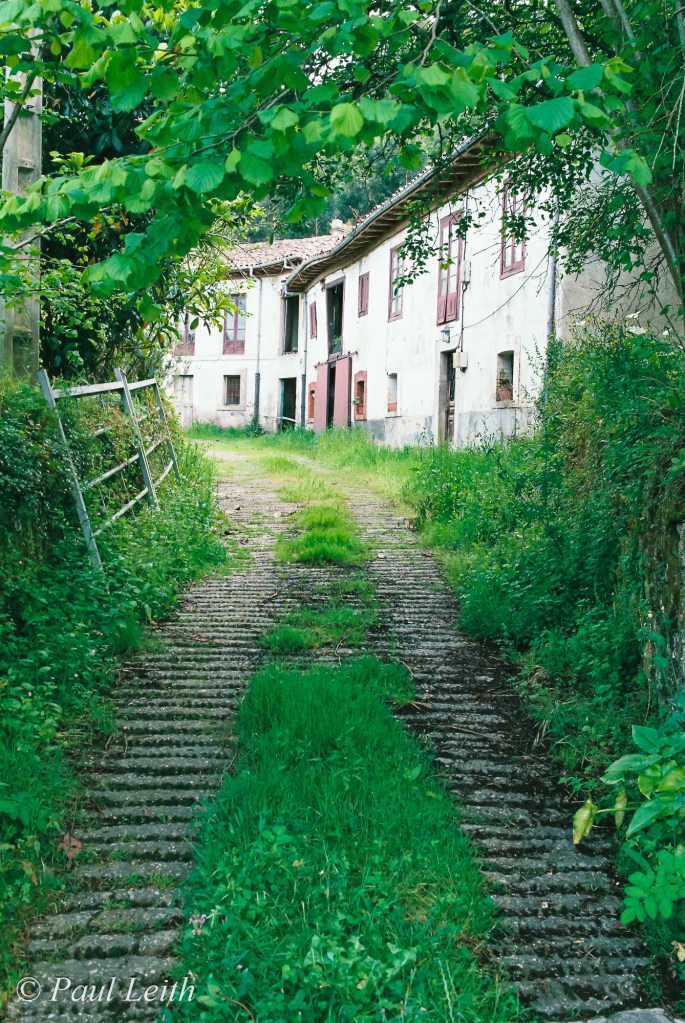
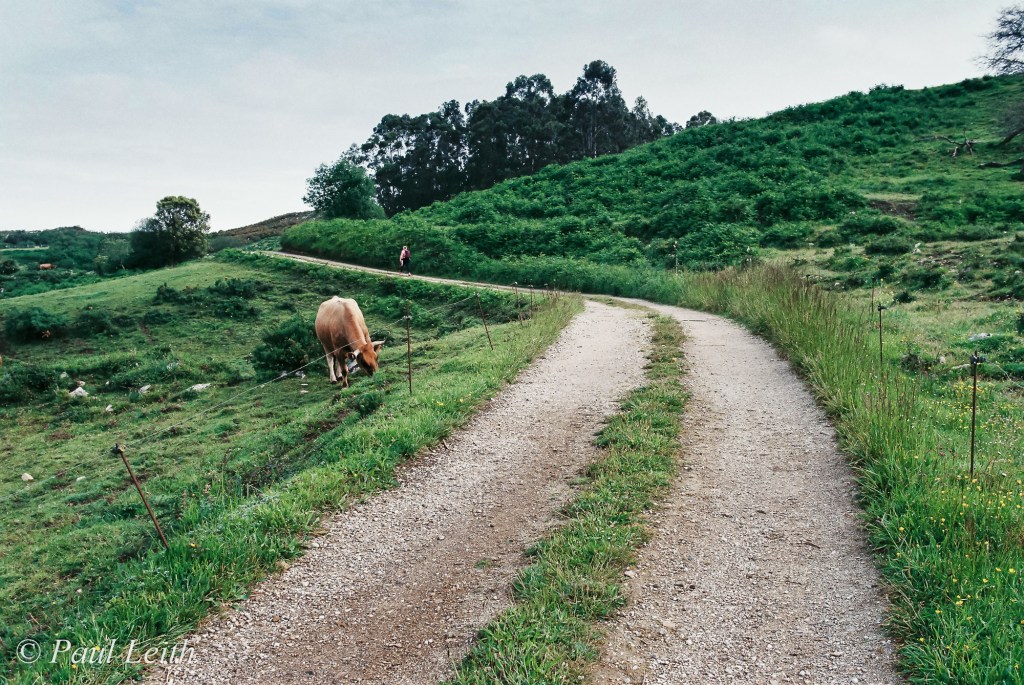
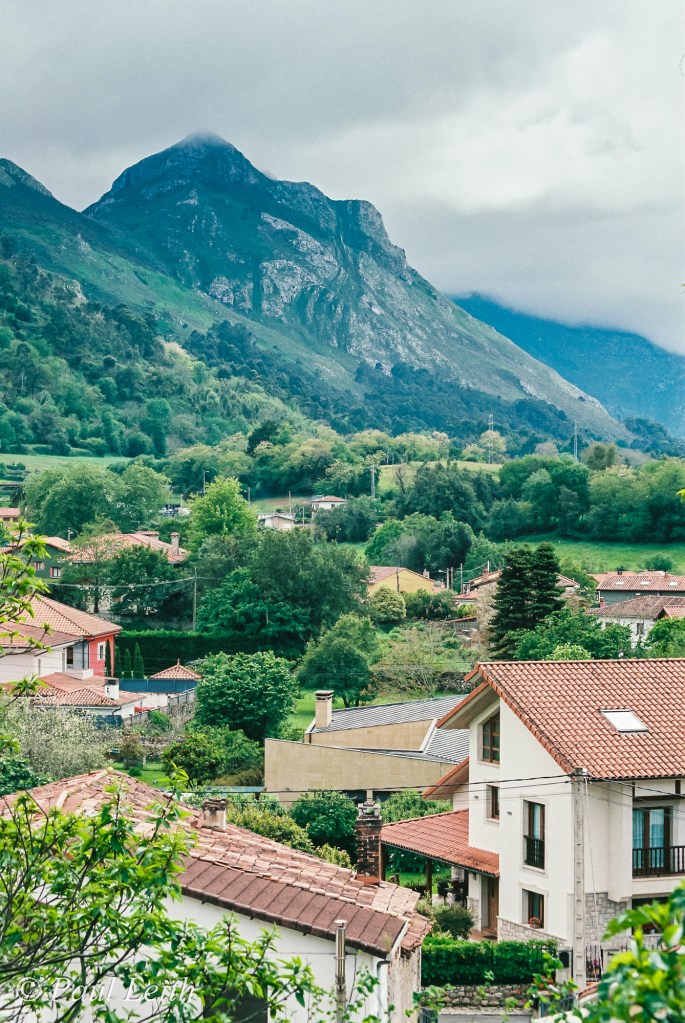
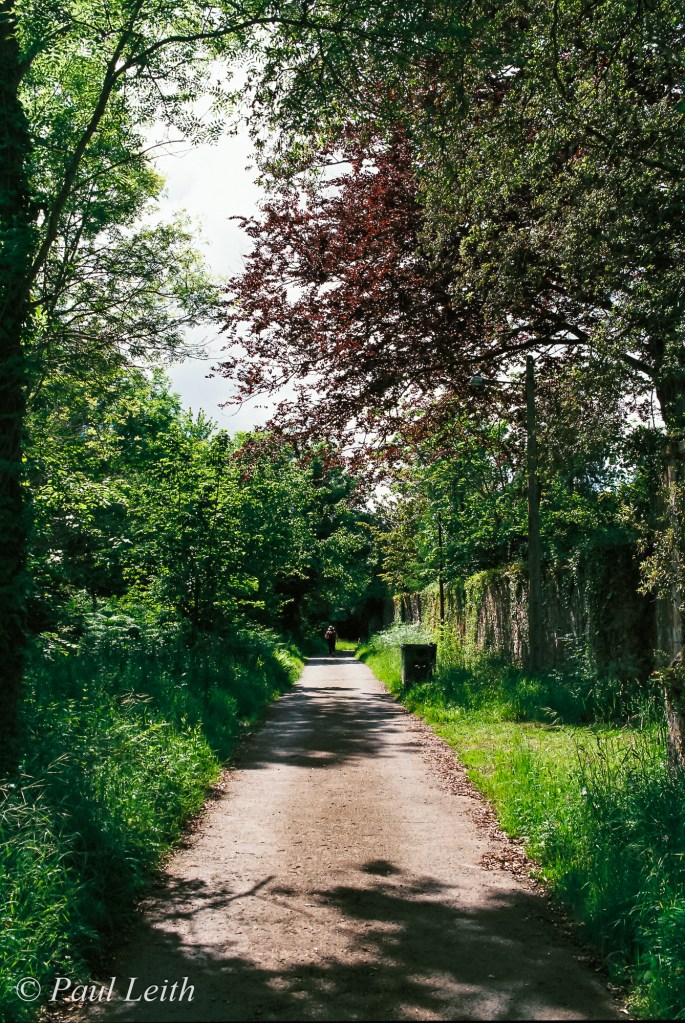
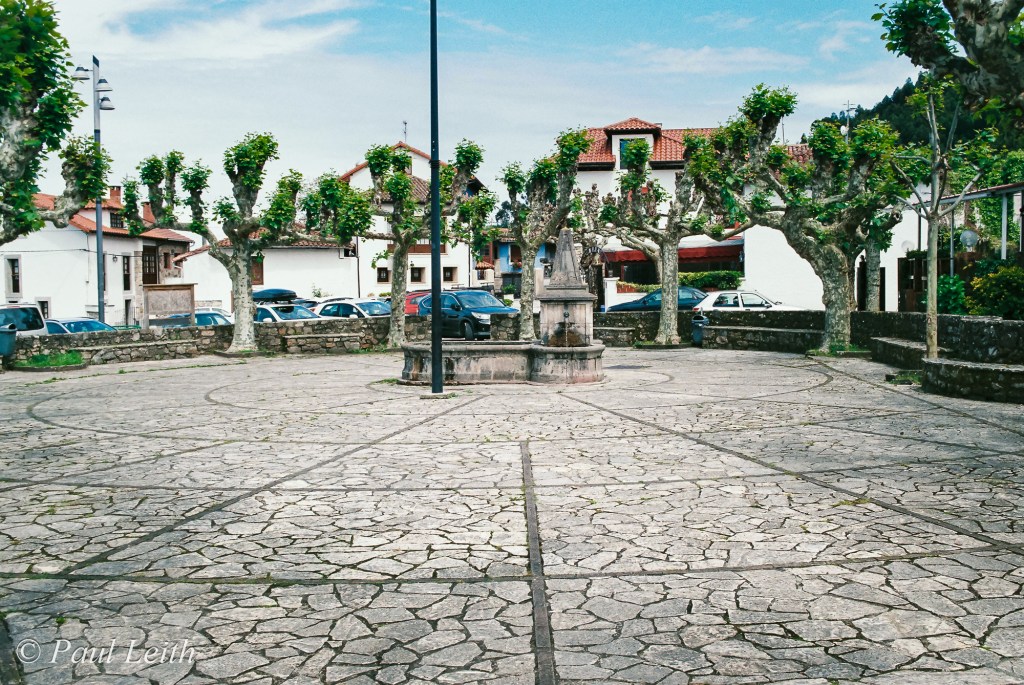
Considering this is Irish Analog Adventures, at times I was shocked at how close the northern Spanish landscape resembled what I was used to seeing in parts of Ireland itself ! There is a similar colour palette – lush greens, varied grey limestone, and green-blues of the Bay of Biscay.
The images above from my rolls of FujiColor C200 are literally the tip of the iceberg, as mentioned there were so many wonders I just can’t fit them all in this 2 part blog.
Wrap-Up
While the focus of this blog post is to share my experiences of shooting film, it has to be said that spending 4 days only having to worry about whether you’ve got your hiking boots tied properly, and which village you need to be at by lunchtime & evening, proved to be the ultimate digital detox! It was wonderful!
Stayed tuned to part 2 when I share the wonders of the Picos Mountains, fishing villages and the beauty of Santander city …
In the meantime, keep shooting film!
Paul